Unit Plan 8 (Grade 8 Orchestra): Record, Analyze, Improve
Grade 8 orchestra unit uses rehearsal recordings and targeted peer/teacher feedback to set measurable goals, track progress, and refine intonation, rhythm accuracy, tone, blend/balance, and expressive ensemble performance.

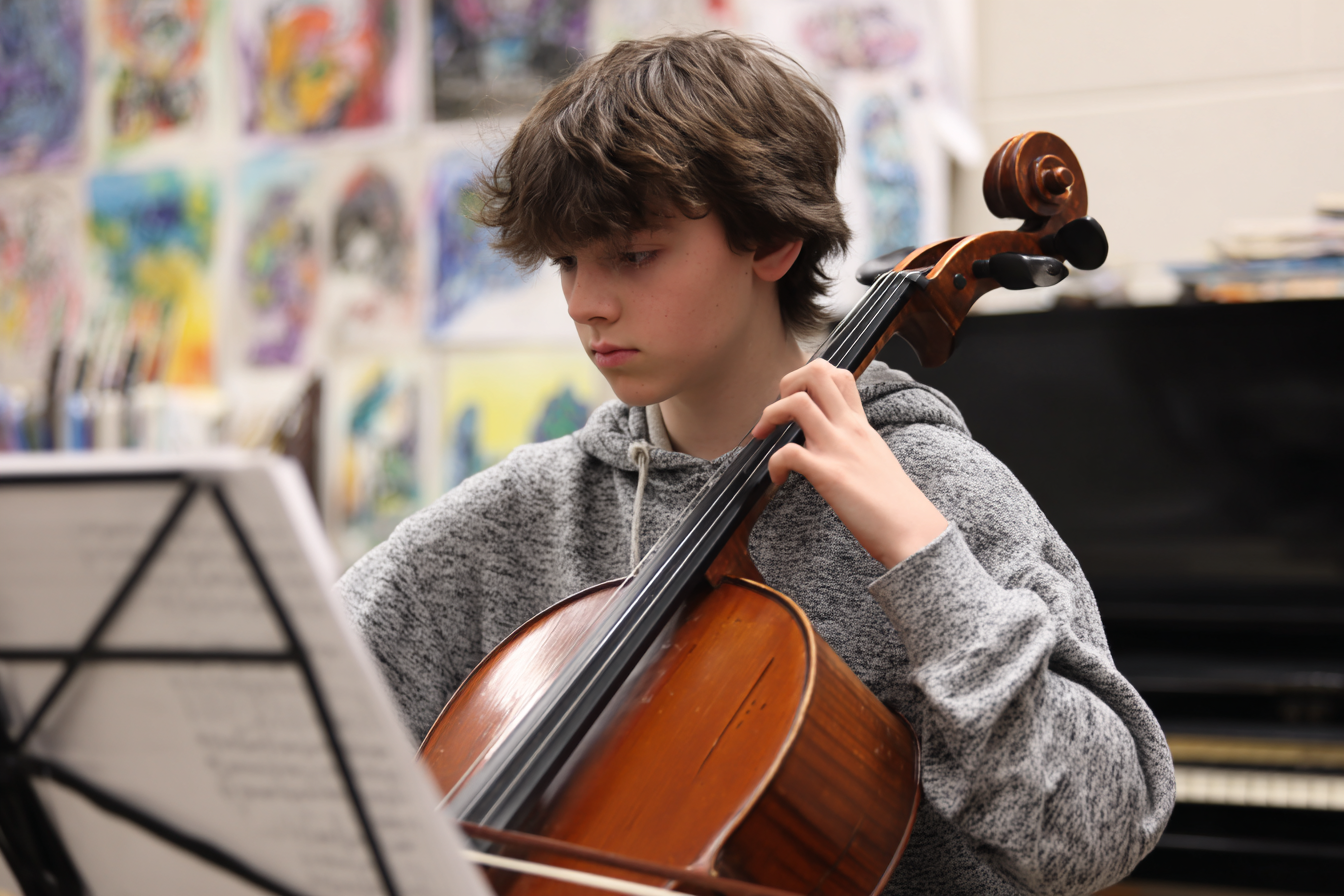
Focus: Use rehearsal recordings and peer/teacher feedback to set specific goals, track progress, and refine intonation, rhythm accuracy, tone, blend/balance, and expression in ensemble performance.
Grade Level: 8
Subject Area: Orchestra (Performing • Rehearsing • Responding)
Total Unit Duration: 5 sessions (one week), 50–60 minutes per session
I. Introduction
In this unit, Grade 8 orchestra students become self-aware musicians who can listen critically to their own ensemble. They will record short rehearsal run-throughs, learn how to analyze what they hear, and give constructive feedback to themselves and their peers. Instead of relying only on the director to notice issues, students practice identifying strengths and next steps in intonation, rhythm, tone, blend/balance, and expression. By the end, they will create a simple improvement plan and see how focused listening and feedback can quickly raise the ensemble’s performance level.
Essential Questions
- How can recording our rehearsals help us hear things we don’t notice while we are playing?
- What does useful feedback sound like, and how is it different from vague criticism?
- How can we listen for intonation, rhythm accuracy, tone, blend/balance, and expression in a recording and make a plan to improve them?
- In what ways are students (not just the teacher) responsible for noticing and fixing ensemble issues?
- How can setting clear, realistic goals and tracking our progress change the way we rehearse and perform?
II. Objectives and Standards
Learning Objectives — Students will be able to:
- Use rehearsal recordings to identify specific strengths and areas for growth in intonation, rhythm, tone, blend/balance, and expression.
- Give and receive peer feedback using respectful, specific language focused on musical behaviors rather than personal criticism.
- Work with teacher and peers to set SMART-style goals (specific, measurable, achievable, relevant, time-bound) for ensemble improvement.
- Apply feedback and goals in subsequent rehearsals, making targeted changes in their own playing and section contributions.
- Use a simple reflection/goal-tracking tool to document progress across multiple recordings.
- Present a short Record–Analyze–Improve Summary showing evidence of improvement and next steps for future rehearsals or performances.
Standards Alignment — Grade 8 Orchestra (custom, NAfME-style)
- OR:Pr5.8b — Use teacher/peer feedback and rehearsal recordings to set goals, track progress, and refine intonation, rhythm accuracy, tone, blend/balance, and expression.
- Example: Students analyze a recording, identify a balance issue, and create an action plan for improvement.
Success Criteria — Student Language
- I can listen to a recording of our orchestra and name at least one strength and one area to improve in clear musical terms.
- I can give specific, respectful feedback to my peers that focuses on the music (intonation, rhythm, tone, blend/balance, expression).
- I can help set one or two realistic goals for our ensemble and explain how we will measure progress.
- I can change something in my own playing based on recorded evidence and feedback (for example: quieter in background, clearer rhythm, better tuning).
- I can use a tracking sheet or reflection form to show how our playing improved between recordings.