Unit Plan 26 (Grade 8 Orchestra): Storytelling Composition Project
Grade 8 orchestra unit guides students to compose and perform narrative string pieces using contour, dynamics, and tone color with justified expressive choices.

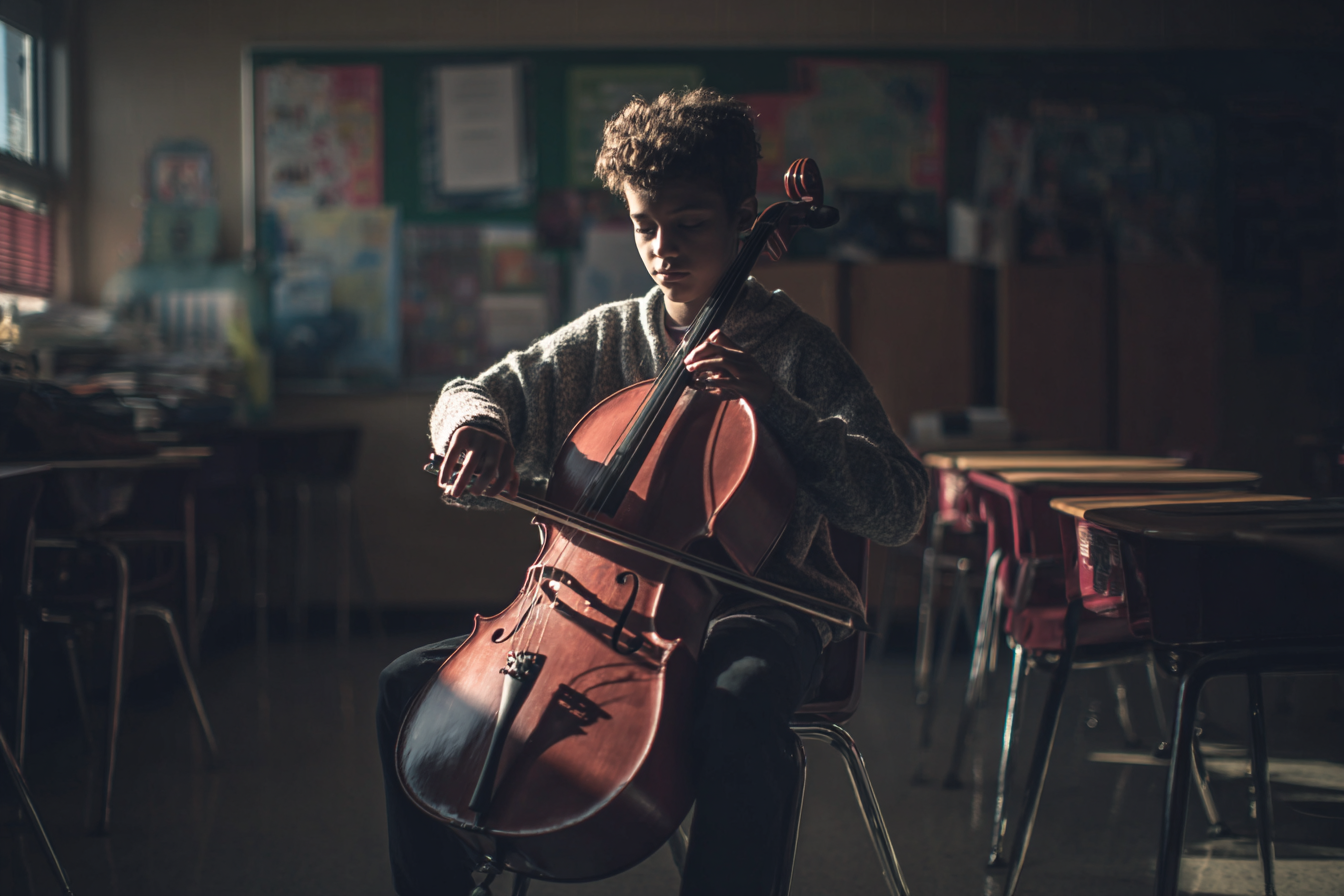
Focus: Create original string music that communicates a clear narrative or scene using tone color, melodic contour, and dynamic shaping, then present and justify musical choices as part of a composer–performer share.
Grade Level: 8
Subject Area: Orchestra (Creating • Performing • Connecting)
Total Unit Duration: 5 sessions (one week), 50–60 minutes per session
I. Introduction
In this unit, Grade 8 orchestra students become composer–storytellers. Drawing on their own interests, experiences, and imaginations, they design short pieces or scenes that tell a story or paint a picture—such as a memory, journey, conflict, or setting. Students experiment with tone color, melodic contour, rhythm, and dynamic shaping to show changes in mood, character, and action. Throughout the week, they sketch, refine, and rehearse their music, then present a Storytelling Composition and a short composer explanation describing how their choices communicate expressive intent and connect to their personal story.
Essential Questions
- How can music alone tell a story or show a scene without words?
- In what ways do tone color, contour, dynamics, and rhythm help communicate characters, settings, and emotions?
- How do my personal interests, experiences, and goals influence the stories I choose to tell and the way I write and perform them?
- What decisions does a composer make to guide what the audience feels or imagines?
- How can I clearly explain and justify my musical choices so others understand my expressive intent?
II. Objectives and Standards
Learning Objectives — Students will be able to:
- Brainstorm and choose a narrative idea (story, scene, memory, or concept) based on their interests and experiences.
- Compose a short string piece or movement (solo, duet, or small ensemble) that uses tone color, melodic contour, dynamics, and rhythm to communicate a clear mood or story arc.
- Revise their composition using peer/teacher feedback, improving clarity of narrative and effectiveness of expressive devices.
- Rehearse and perform their piece (live or via recording) with consistent expressive intent and technical control.
- Present a composer explanation that justifies how specific musical choices communicate the intended story and how the piece connects to their personal identity and goals.
Standards Alignment — Grade 8 Orchestra (custom, NAfME-style)
- OR:Cr3.8b — Present a final musical creation and justify how musical choices (tempo, dynamics, bowing, phrasing, tone color) communicate expressive intent to an audience.
- Example: Students perform their composition and explain how bow placement and crescendos increased intensity.
- OR:Cn10.8a — Describe how personal interests, experiences, and goals influence musical growth, leadership, and decision-making as a string musician.
- Example: Students set a goal (clean shifting, expressive phrasing, leadership) and explain how it supports future music plans.
Success Criteria — Student Language
- I can choose a story or idea that matters to me and turn it into a musical plan.
- I can use tone color, contour, dynamics, and rhythm on string instruments to show changes in mood, character, or action.
- I can revise my music to make the story clearer and more expressive.
- I can perform my piece (or have it performed) in a way that matches the feeling and shape I imagined.
- I can explain how my composition connects to my life and why I chose specific musical ideas to tell my story.