Unit Plan 7 (Grade 8 Orchestra): Tone Color as Expression
Grade 8 orchestra unit explores tone color through bow placement, speed, and string choice, shaping expressive interpretation, character, and ensemble mood.

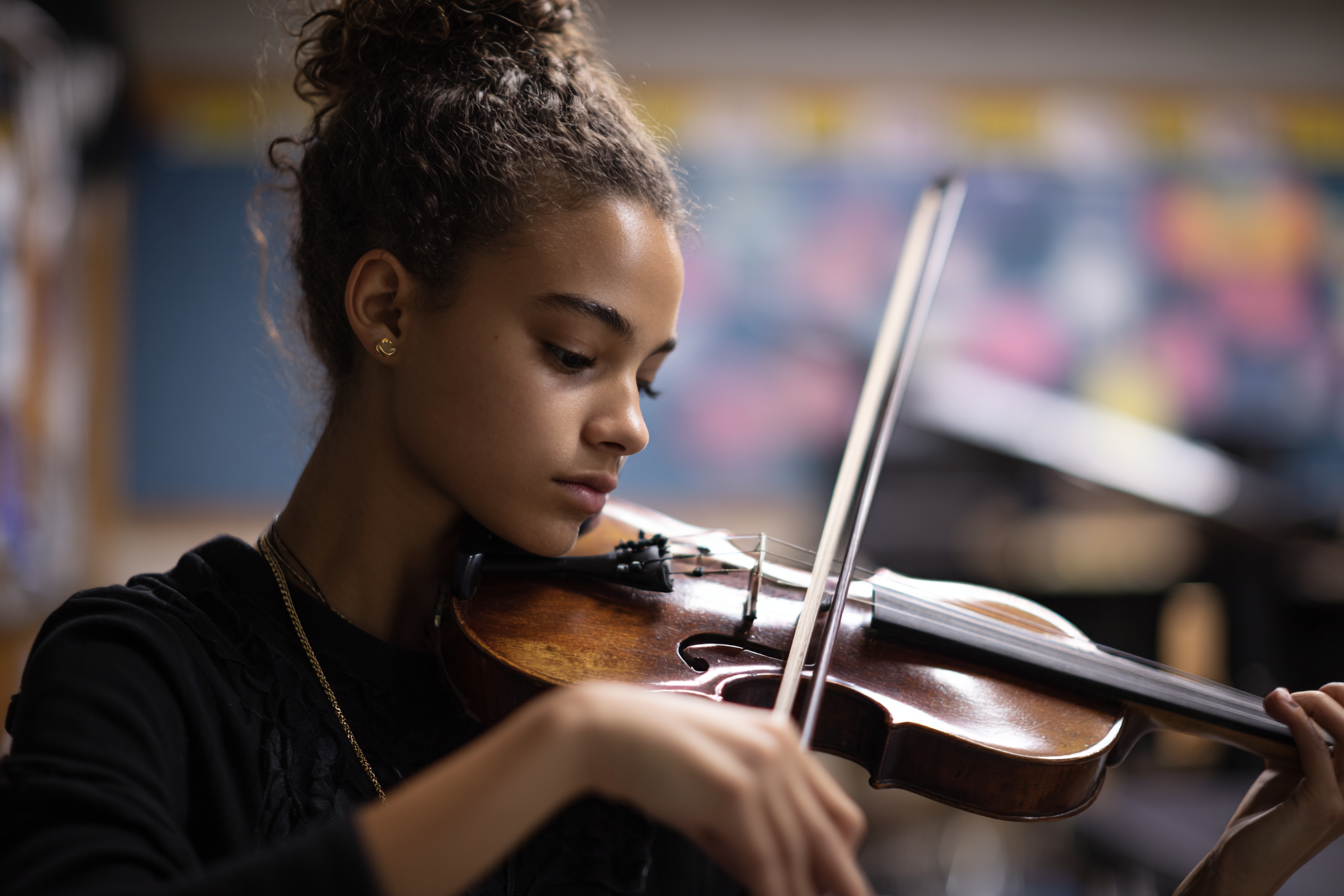
Focus: Explore tone color changes through bow placement, bow speed, and string choice to shape expressive interpretation and convey character and mood in ensemble performance.
Grade Level: 8
Subject Area: Orchestra (Performing • Responding)
Total Unit Duration: 5 sessions (one week), 50–60 minutes per session
I. Introduction
In this unit, Grade 8 orchestra students treat their instruments like a palette of colors, using tone color to change the emotional impact of the music. They experiment with bow placement (sul tasto vs. sul ponticello vs. normal), bow speed and weight, and string choice/position to create sounds that feel warm, bright, dark, tense, or mysterious. Students listen to how different instruments and sections contribute to character and meaning in a piece, then plan and perform intentional tone color choices that match style and mood rather than playing with “one default sound” the whole time.
Essential Questions
- What is tone color, and how does it affect the character and emotion of orchestra music?
- How do bow placement, bow speed, bow weight, and string choice/position change the way a note or phrase feels?
- How do different instrument roles (melody, accompaniment, texture) and bowing styles (legato, marcato, tremolo, etc.) contribute to the meaning of a piece?
- How can we use tone color on purpose—not by accident—to support a stylistically appropriate interpretation?
- How can we explain and justify our tone color decisions using musical language (elements, form, roles)?
II. Objectives and Standards
Learning Objectives — Students will be able to:
- Explain and demonstrate at least three distinct tone colors (e.g., sul tasto, normale, sul ponticello) by adjusting bow placement and contact point on the string.
- Use bow speed, bow weight, and bow lane to shape dynamics, articulation, and tone color in a short phrase, then describe the expressive effect.
- Compare string choices/positions (e.g., same pitch on different strings) and decide which option best fits a desired character or mood in a given passage.
- Analyze selected excerpts to explain how tone color, bowing style, string choice, and instrument roles contribute to contrast, unity, and meaning in the music.
- Create a simple Tone Color Map for an excerpt, indicating where and why they will change tone color to match the interpretation.
- Perform a short Tone Color Interpretation Study, demonstrating purposeful color changes and verbally or in writing explaining their artistic decisions.
Standards Alignment — Grade 8 Orchestra (custom, NAfME-style)
- OR:Pr4.8c — Explain and demonstrate how dynamics, tempo, bowing articulation, phrasing, and tone color shape interpretation and style in string music.
- Example: Students perform a passage using different bow placements (near fingerboard vs. nearer bridge) and describe the expressive effect.
- OR:Re7.8b — Explain how tone color, bowing style, string choice/position, and instrument roles contribute to character and meaning in string music.
- Example: Students explain how melody in violins with tremolo accompaniment changes mood.
Success Criteria — Student Language
- I can change my tone color on purpose by moving my bow closer to the fingerboard or the bridge and adjusting speed/weight.
- I can play the same phrase in different ways (warmer, brighter, darker, more intense) and explain what I changed in my bowing.
- I can choose which string/position to use for a note or phrase to match the character I want.
- I can listen to a piece and explain how tone color and instrument roles (melody/accompaniment) help tell the musical story.
- I can create and follow a Tone Color Map that shows where I will change color in a piece and why.