Unit Plan 28 (Grade 8 Vocal Music): Expressive Vocal Composition
8th grade choir unit creating original vocal music through improvisation, shaping emotions, images, and social themes with clear expressive intent and style.

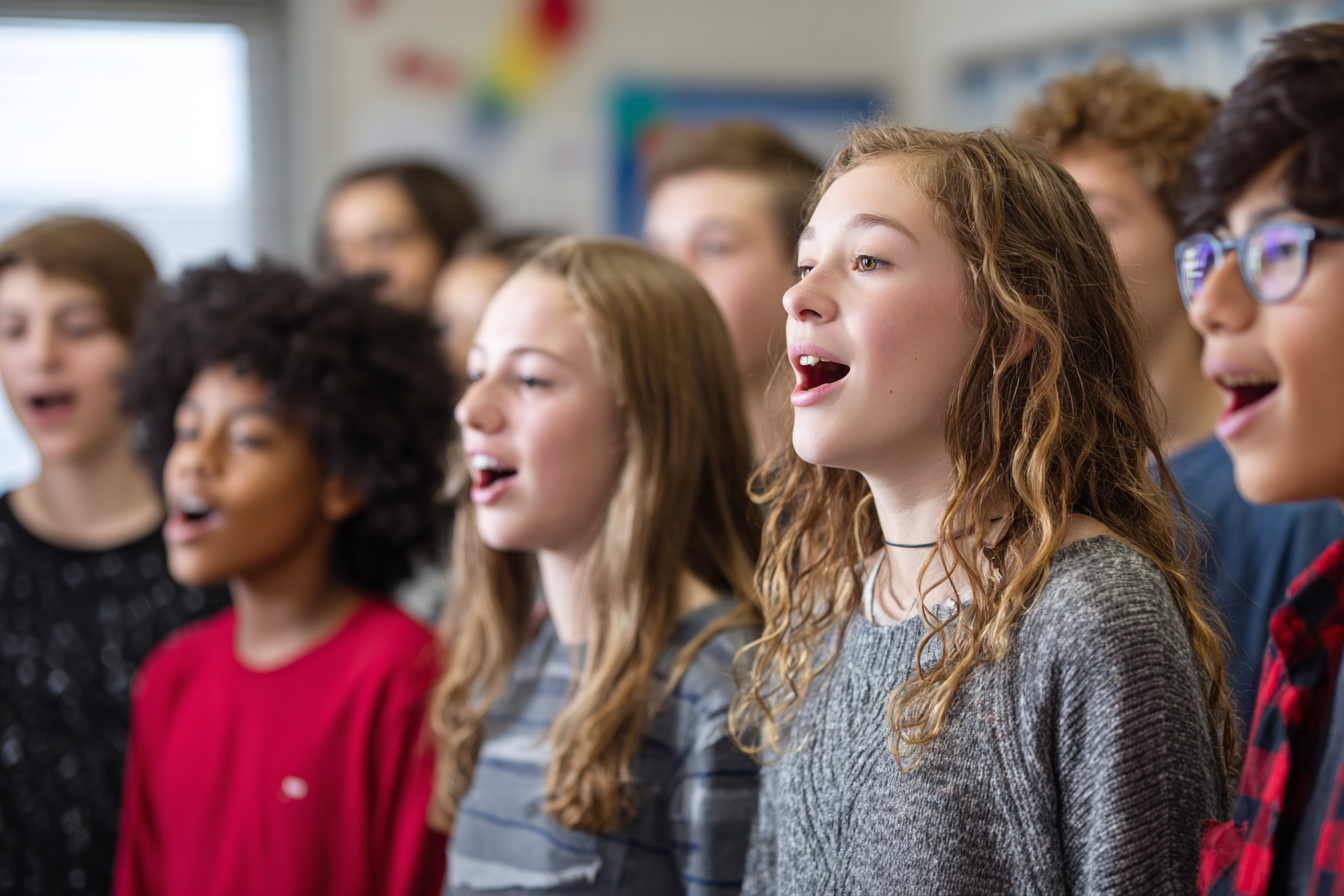
Focus: Create original vocal music inspired by emotions, images, or social themes, using improvisation to generate ideas and refining them into crafted pieces that clearly communicate expressive intent and stylistic awareness.
Grade Level: 8
Subject Area: Vocal Music (Choir • Creativity • Expression)
Total Unit Duration: 5 sessions (one week), 50–60 minutes per session
I. Introduction
In this unit, students explore how feelings, images, and social themes can be turned into original vocal compositions. They begin with guided improvisations to match specific moods or styles, then shape those ideas into short vocal works using text, melody, rhythm, and expressive elements. Students choose an emotion (joy, anxiety, determination), an image (storm, sunrise, city at night), or a social theme (kindness, justice, belonging) and design music that fits it. The unit ends with students presenting their expressive vocal pieces and explaining how their musical choices communicate intent to an audience.
Essential Questions
- How can improvisation help us discover musical ideas that show specific emotions, images, or themes?
- Which musical tools (pitch, rhythm, dynamics, tempo, tone, articulation) are most powerful for expressing a particular feeling or idea?
- How do we turn improvised ideas into a crafted vocal composition that is clear, singable, and stylistically aware?
- How can we explain our musical decisions so an audience understands our expressive goals?
II. Objectives and Standards
Learning Objectives — Students will be able to:
- Improvise vocal lines and rhythmic ideas using expanded pitch sets and varied rhythms to express a chosen emotion, image, or social theme.
- Select and develop one or more improvised ideas into a short vocal composition with clear structure (e.g., motif-based, ABA, verse/chorus, call-and-response).
- Use dynamics, tempo, articulation, and tone quality intentionally to support the expressive goal and style of their piece.
- Present their final vocal creation with reasonable craftsmanship (accuracy, coherence, singability) and stylistic awareness.
- Explain in an Artist Statement how specific musical decisions (melodic shape, rhythm, dynamics, tone, text) communicate their expressive intent to listeners.
- Reflect on which improvisation and composition strategies helped them express their ideas most effectively.
Standards Alignment — Grade 8 Vocal Music (custom, NAfME-style)
- VM:Cr1.8a — Improvise vocal lines and rhythmic/harmonic ideas using expanded pitch sets and varied rhythms to meet a specific expressive goal and style.
- Example: Students improvise a short melodic line that fits a given style (folk, pop, or chant) and explain which musical choices created that style.
- VM:Cr3.8b — Present a final vocal creation that demonstrates craftsmanship and stylistic awareness, and explain how musical decisions communicate intent to an audience.
- Example: Students perform their composition and explain how articulation, dynamics, and tone supported the text.
Success Criteria — Student Language
- I can improvise short vocal ideas that sound like a specific emotion, image, or social theme.
- I can choose my favorite improvisation ideas and turn them into a finished vocal piece with a clear structure.
- I can perform my piece with dynamics, tempo, and tone that match the feeling or theme I chose.
- I can explain how at least three musical decisions (melody, rhythm, dynamics, tone, text) support my expressive goal.
- I can reflect on what worked well and what I might change next time to express my ideas even more clearly.