Unit Plan 5 (Grade K Library): Wondering About Stories and Pictures
Kindergarten library unit on picture walks, read-alouds, noticing details, asking questions, making predictions, and building curiosity.

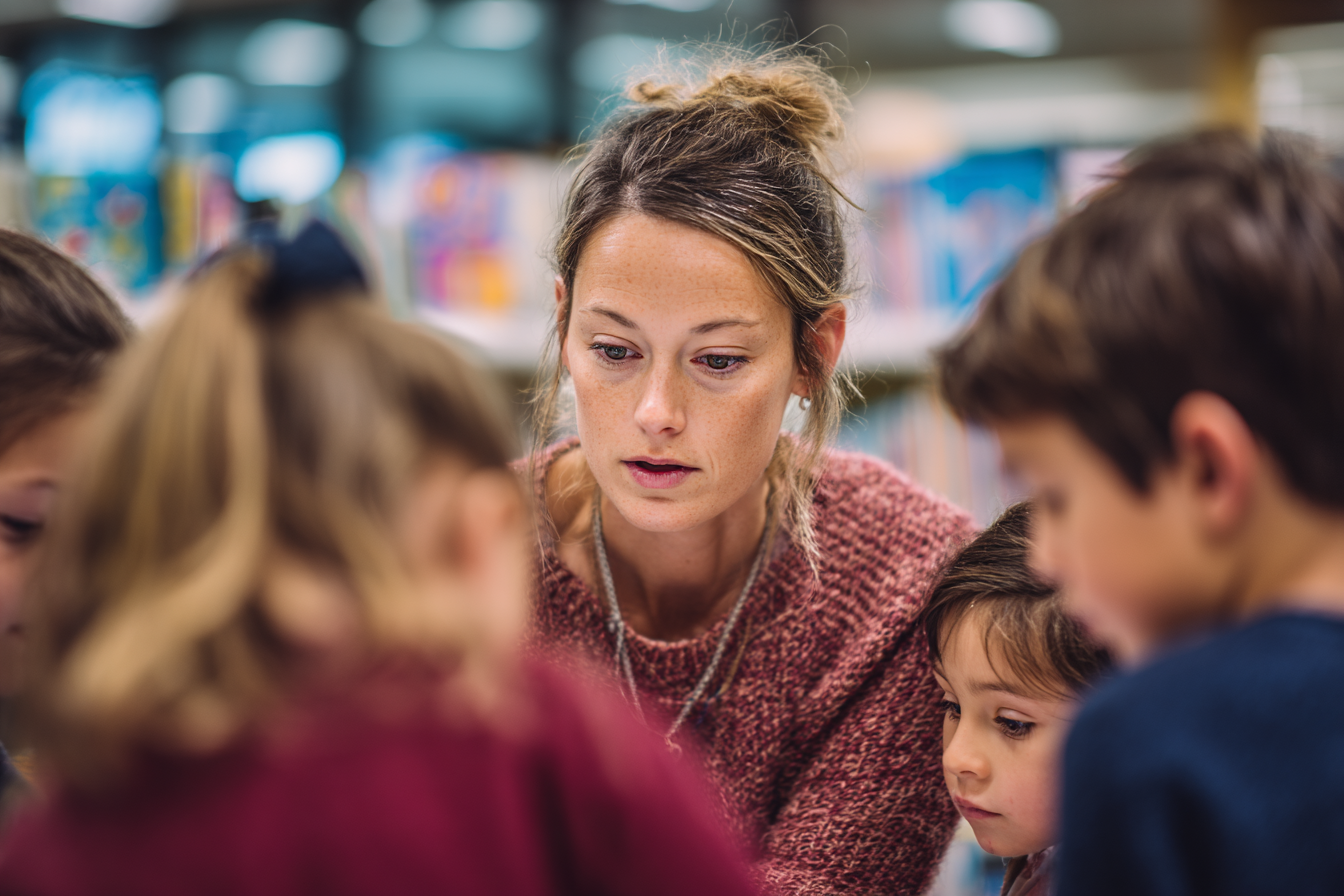
Focus: Help Kindergarten students understand that books can make us curious by inviting them to notice details, ask questions, share wonderings, and make simple predictions during picture walks and read-alouds. Students use pictures, conversations, and teacher prompts to begin exploring ideas in a developmentally appropriate way.
Grade Level: K
Subject Area: Library (Inquiry • Picture Walks • Observation/Prediction)
Total Unit Duration: 1–3 weeks, 50–60 minutes per session
I. Introduction
This unit introduces Kindergarten students to the idea that questions are an important part of library learning. During picture walks, read-alouds, and short discussions, students practice looking closely at illustrations, sharing what they notice, and saying what they wonder. The librarian models curiosity with prompts such as “What do you think is happening?”, “What are you wondering about this picture?”, and “What clue do you see?” The goal is not for students to conduct formal research, but to help them understand that noticing and wondering are valuable first steps in learning from books.
Essential Questions
- How can books and pictures make me wonder?
- What can I notice in a picture or story?
- How can pictures, read-alouds, and conversations help me begin learning answers?
- How can I share an observation, prediction, or connection during library time?
II. Objectives and Standards
Learning Objectives — Students will be able to:
- Ask questions and share wonderings about books, pictures, topics, and ideas introduced in library.
- Use pictures, read-alouds, and simple conversations to begin exploring answers to questions.
- Share observations, predictions, and simple connections during or after library lessons.
- Look closely at illustrations and identify details that make them curious.
- Participate in picture walks and read-aloud discussions with support and respect.
- (Optional Sessions) Strengthen early inquiry habits through repeated noticing, wondering, predicting, and picture-based discussion.
Standards Alignment — Kindergarten (AASL-based Custom)
- L:S1.Ka — Ask questions and share wonderings about books, pictures, topics, and ideas introduced in library.
- Example: A student asks, “How do bees make honey?” after hearing a nonfiction read-aloud.
- L:S1.Kb — Use pictures, read-alouds, and simple conversations to begin exploring answers to questions.
- Example: A student studies the illustrations in an informational book to learn more about weather.
- L:S1.Kc — Share observations, predictions, and simple connections during or after library lessons.
- Example: A student says, “I think the character is sad because she lost her dog.”
Success Criteria — Student Language
- I can look closely at pictures in a book.
- I can say what I notice.
- I can ask a question or share something I wonder.
- I can make a simple prediction about what might happen or what I might learn.
- I can use pictures, stories, and class talk to begin learning more.