Unit Plan 1 (PreK PE): Welcome to Movement
PreK PE unit builds basic movement, spatial awareness, and safe play routines through playful animal actions that help children explore locomotor skills with confidence.

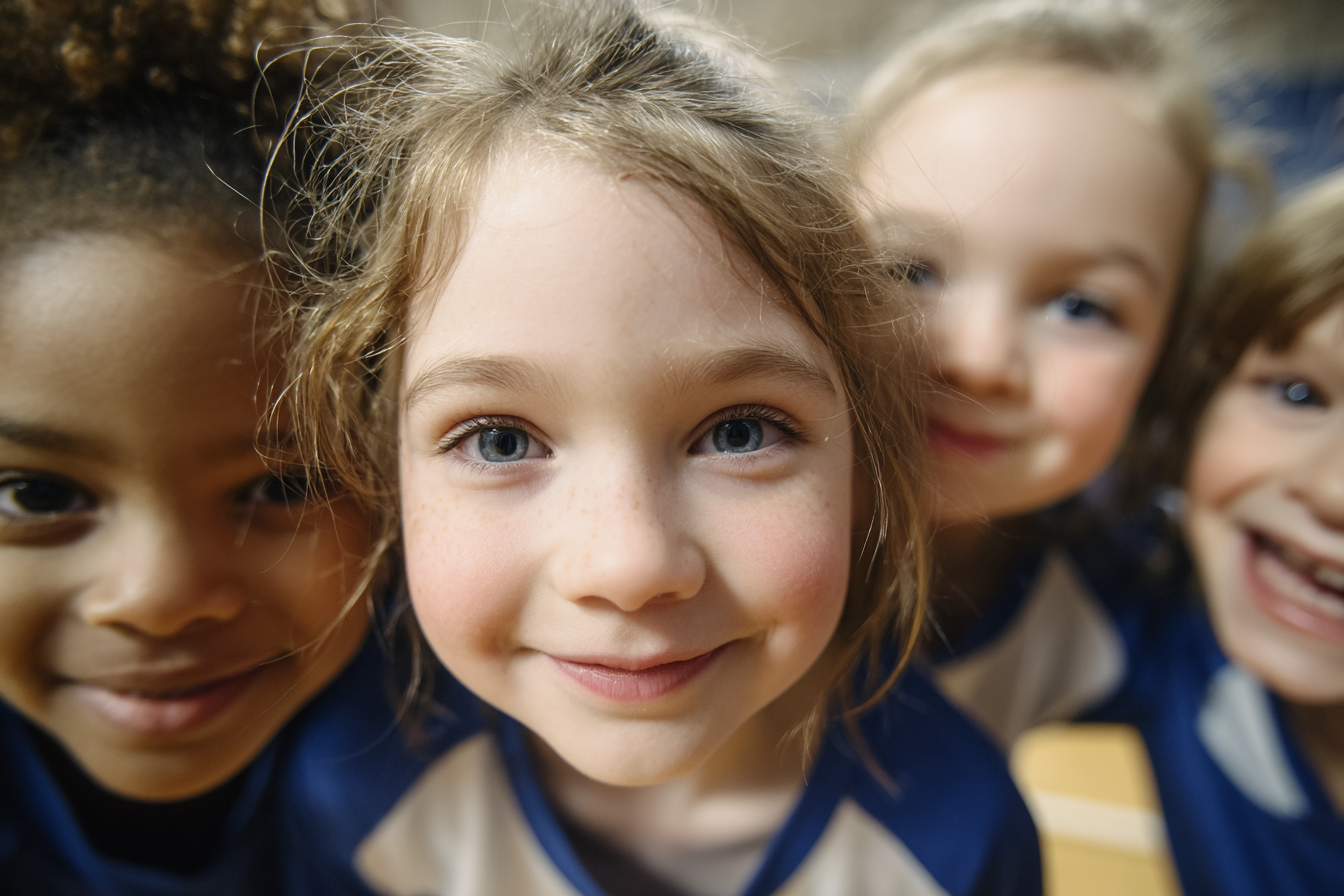
Focus: Help children explore basic movement through playful animal actions while learning safe play routines, personal space, and how to move in the gym with confidence.
Grade Level: PreK
Subject Area: Physical Education (Locomotor Skills • Spatial Awareness • Safe Play Routines)
Total Unit Duration: 2 core sessions + 2 optional sessions (1–2 weeks), 20–30 minutes per session
I. Introduction
PreK students begin PE by learning that movement can be fun, safe, and full of exploration. At this age, children benefit from simple routines, playful imitation, and clear movement cues that help them feel comfortable in the gym. This unit uses follow-the-leader walking and stretching as a warm-up and then moves into Move Like Animals, where children walk, hop, crawl, and jump like different animals around the space. The goal is to introduce movement exploration, teach safe play routines, and help children begin noticing personal space while enjoying active play.
Essential Questions
- How can I move in PE?
- How can I move safely around other children?
- What does my own space look like?
- How can I listen and follow simple movement rules?
II. Objectives and Standards
Learning Objectives — Students will be able to:
- Demonstrate basic locomotor skills such as walking, running, jumping, hopping, and galloping.
- Move safely in general space while recognizing personal space.
- Follow simple rules and safety routines during movement activities.
- Participate actively in playful movement exploration with growing confidence.
Standards Alignment — PreK (SHAPE America-based custom)
- PE:S1.PKa Demonstrate basic locomotor skills such as walking, running, jumping, hopping, and galloping.
- Example: Children practice moving across the gym using different locomotor movements.
- PE:S2.PKa Move safely in general space and recognize personal space while participating in activities.
- Example: Children move around the gym without bumping into others.
- PE:S4.PKa Follow simple rules and safety guidelines during physical activity.
- Example: Children wait their turn during a throwing activity.
Success Criteria — Student Language
- I can move my body in different ways.
- I can keep my body in my own space.
- I can stop when the teacher says stop.
- I can follow simple rules in PE.
III. Materials and Resources
Tasks & Tools (teacher acquires/curates)
- General Equipment
- Cones to mark boundaries, pathways, and safe stopping spaces.
- Floor spots or poly spots for home spots and movement starts.
- Whistle and/or visual stop signal.
- Picture cards or posters showing walk, hop, jump, crawl, freeze, safe, and animal.
- Warm-Up Equipment
- Open space with enough room for children to follow the teacher safely.
- Optional picture cards for simple stretches such as reach high, touch toes, twist, and freeze.
- Optional music for follow-the-leader movement.
- Game/Activity Equipment
- Animal picture cards or stuffed animals for movement prompts.
- Cones, spots, or hoops to create simple animal pathways or “habitats.”
- Optional tunnels or mats for crawling animals.
- Optional themed visuals such as jungle path, farm trail, zoo zones, or animal adventure to make the lesson inviting for PreK students.
- Reflection & Assessment Tools
- Teacher checklist for locomotor movement, personal space, safe stopping, and rule-following.
- Quick reflection prompts, thumbs-up/sideways/down checks, or smiley-face cards.
- Optional anchor chart with cues such as eyes up, find your space, freeze, and move safely.
Preparation
- Mark a clear movement area with visible boundaries.
- Spread home spots far enough apart so children can practice personal space.
- Prepare a small set of familiar animals with matching locomotor actions.
- Model how to start, stop, and freeze before beginning the game.
- Keep directions short, playful, and repeated often so children can follow routines with success.
Common Misconceptions to Surface
- “Moving fast means I am doing PE the best.” → Good movement also means safe movement and control.
- “If I want to be the animal, I can go anywhere.” → Animal play still uses personal space and gym boundaries.
- “Stopping means just slowing down a little.” → In PE, stopping means the body freezes and listens.
- “Rules make the game less fun.” → Rules help everyone move and play safely together.
Key Terms (highlight in lessons) walk, run, hop, jump, crawl, freeze, safe, space, animal, listen
IV. Lesson Procedure
(Each lesson follows: Launch → Warm-up → Activity/Game → Reflect. Timing for a 20–30 minute block.)
Session 1 — Exploring Animal Movements Safely
- Launch (3–4 min)
- Children begin on home spots facing the teacher.
- Teacher introduces PE as a place to move, play, and stay safe.
- Briefly model a few simple animal moves such as:
- walk like a duck,
- hop like a bunny,
- crawl like a bear,
- jump like a frog.
- Review one important safety reminder: children keep their bodies in their own space and freeze when the teacher says stop.
- Warm-up (5–6 min) — Follow-the-Leader Walking and Stretching
- Equipment: Open space, optional music, optional stretch cards.
- Set-Up:
- Children stand on home spots or in personal space.
- Teacher stands where all children can see the movements clearly.
- Procedure:
- Teacher leads children through simple follow-the-leader actions such as:
- walk slowly,
- walk on tiptoes,
- reach high,
- touch toes,
- stretch arms wide,
- freeze.
- Children copy the teacher and practice starting and stopping together.
- This helps children prepare for active movement while learning how to watch and follow safely.
- Teacher leads children through simple follow-the-leader actions such as:
- Rules:
- The warm-up is played by copying the teacher’s movement.
- Children must stay in their own space and keep enough room from others.
- Freeze means stop the body right away and listen.
- Everyone tries each movement with safe bodies.
- Activity/Game (10–12 min) — Move Like Animals
- Equipment: Animal cards, cones, spots, optional mats or tunnels.
- Set-Up:
- Mark a large open movement area with clear boundaries.
- Place a few animal picture cards around the room or have the teacher hold them up one at a time.
- Children begin spread out in general space with safe spacing.
- Procedure:
- Teacher shows an animal card and children move like that animal around the gym.
- Example prompts:
- bunny hop,
- duck walk,
- bear crawl,
- frog jump,
- horse gallop.
- After a short round, the teacher says freeze and introduces the next animal.
- Teacher reinforces cues such as:
- “Find your own space.”
- “Look where you are going.”
- “Move safely.”
- “Freeze and listen.”
- The game stays playful and exploratory, with children repeating several different animal actions.
- Rules:
- The game is played by moving like the animal the teacher chooses.
- Children must stay inside the boundaries and keep enough room from others.
- Everyone freezes when the teacher gives the stop signal.
- Children use safe bodies and do not bump into classmates.
- Reflect (2–3 min)
- Prompt: “Which animal move was the most fun today?”
Session 2 — Using Space and Following Simple Rules
- Launch (3–4 min)
- Review that PE means moving safely and listening for stop signals.
- Ask children to show what a strong freeze looks like.
- Explain that today they will move like animals again and practice using even safer space around others.
- Warm-up (5–6 min) — Follow-the-Leader Walking and Stretching with Changes
- Equipment: Open space, optional music.
- Set-Up:
- Use the same home-spot or personal-space setup as Session 1.
- Procedure:
- Teacher leads another follow-the-leader warm-up with a few quick changes such as:
- walk,
- freeze,
- reach high,
- march,
- touch toes,
- turn and freeze.
- This gives children more practice following teacher cues and stopping safely.
- Teacher leads another follow-the-leader warm-up with a few quick changes such as:
- Rules:
- The warm-up is played by following the teacher’s actions in order.
- Children must keep enough room and stay in their own space.
- Everyone freezes quickly on signal and restarts only when told.
- Activity/Game (10–12 min) — Move Like Animals: Animal Path Adventure
- Equipment: Animal cards, cones, hoops, spots, optional mats.
- Set-Up:
- Create a few simple animal path areas around the room, such as:
- hopping spots,
- crawling mat,
- galloping lane,
- jumping hoops.
- Children begin in one area and move with teacher direction.
- Create a few simple animal path areas around the room, such as:
- Procedure:
- Teacher calls an animal and directs children to the matching movement path.
- Example:
- “Hop like a bunny to the spots.”
- “Crawl like a bear on the mat.”
- “Gallop like a horse in the lane.”
- “Jump like a frog in the hoops.”
- Children move through the activity areas in short rounds and freeze when the signal is given.
- Teacher continues reinforcing personal space and simple safety rules.
- Rules:
- The game is played by moving only in the area the teacher chooses for that animal.
- Children must wait if another child is too close in front of them.
- Everyone freezes on the teacher’s signal and listens for the next animal.
- Safe movement matters more than going fast.
- Reflect (2–3 min)
- Prompt: “How did you keep your body safe in the animal game today?”
Optional Session 3 — Zoo Trail
- Launch (3–4 min)
- Review that children can move like animals and still use safe space.
- Explain that today they will keep practicing those same ideas on a zoo trail.
- Warm-up (5–6 min) — Follow-the-Leader Favorites
- Equipment: Open space, optional music.
- Set-Up:
- Use the same warm-up space from earlier sessions.
- Procedure:
- Teacher leads favorite walking, stretching, and freezing actions from Sessions 1 and 2.
- Children continue practicing simple routines and safe stopping.
- Rules:
- The warm-up is played by copying the teacher safely.
- Children must stay in personal space and freeze on cue.
- Everyone tries each movement.
- Activity/Game (10–12 min) — Zoo Trail Adventure
- Equipment: Animal cards, cones, hoops, mats, spots.
- Set-Up:
- Arrange the animal movement tasks as a trail or loop around the room.
- Children move through the zoo trail in a teacher-guided order.
- Procedure:
- Children visit each “zoo animal stop” and move like that animal for a short round.
- Teacher keeps directions short and playful while reinforcing safe space and rule-following.
- This keeps the lesson engaging while continuing to support movement exploration.
- Rules:
- The trail is played by completing each animal stop in order.
- Children must stay on the trail and wait for open space before moving forward.
- Everyone freezes on cue and listens for the next direction.
- Reflect (2–3 min)
- Prompt: “Which zoo animal did you like moving like the most?”
Optional Session 4 — Jungle Movement Adventure
- Launch (3–4 min)
- Review that children can move in many ways while staying safe and listening.
- Explain that today they will use those same skills in one more animal adventure.
- Warm-up (5–6 min) — Group Follow-the-Leader Parade
- Equipment: Open space, optional music.
- Set-Up:
- Children stand on home spots or follow the teacher on a simple route.
- Procedure:
- Teacher leads a short parade of walking, stretching, jumping, and freezing.
- This keeps the warm-up connected to movement exploration and routines.
- Rules:
- The warm-up is played by following the teacher’s movement safely.
- Children must keep enough room and stop on signal.
- Everyone uses controlled bodies.
- Activity/Game (10–12 min) — Jungle Movement Adventure
- Equipment: Animal cards, cones, hoops, mats, optional jungle visuals.
- Set-Up:
- Use the same basic animal movement areas, but give them jungle names such as:
- frog pond,
- monkey path,
- bear cave,
- horse trail.
- Children begin at one start area with safe spacing.
- Use the same basic animal movement areas, but give them jungle names such as:
- Procedure:
- Teacher leads children through the jungle by calling different animal moves and locations.
- Children move, freeze, and restart as the teacher guides them through the adventure.
- This gives children one more fun, imaginative way to explore locomotor movement and safe routines.
- Rules:
- The game is played by following the teacher’s jungle movement cue.
- Children must stay in the correct area and keep enough space from others.
- Everyone freezes on signal and listens before moving again.
- Reflect (2–3 min)
- Prompt: “What did you learn about moving safely in PE?”
V. Differentiation and Accommodations
Advanced Learners
- Encourage children to switch smoothly between two different animal movements when the teacher cues a change.
- Let children help name an animal movement the class already knows.
- Invite children to model a safe freeze after teacher approval.
Targeted Support
- Keep directions short, repeated, and highly visual.
- Use repeated cues such as walk, hop, jump, crawl, freeze, and safe space.
- Begin with slower animal movements before adding faster ones.
- Keep children near the teacher for extra modeling and reassurance.
Multilingual Learners
- Use picture cards for each animal and movement word.
- Demonstrate every animal move clearly before children begin.
- Place children near supportive classmates who model routines well.
- Accept gesture or movement demonstration during reflection instead of full verbal explanation.
IEP/504 & Accessibility
- Modify movement distance, speed, or number of animal choices as needed.
- Offer seated, standing, or lower-impact versions of animal movements when appropriate.
- Keep boundaries, pathways, and visuals highly visible and predictable.
- Provide extra adult or peer support for transitions, stopping, and safe spacing if needed.
VI. Assessment and Evaluation
Formative Checks (daily)
- Session 1 — Children begin demonstrating basic locomotor movement, safe spacing, and simple stop-signal routines during animal play.
- Session 2 — Children improve movement control, personal space awareness, and following simple safety rules during guided animal pathways.
- Optional Session 3 — Children reinforce movement exploration and safe play through a zoo-trail format.
- Optional Session 4 — Children demonstrate stronger confidence with animal movement and group routines during an adventure-style lesson.
Summative — Welcome to Movement Checklist (0–2 per criterion, total 10)
- Basic Locomotor Skills (PE:S1.PKa)
- 2: Consistently demonstrates basic locomotor movements such as walking, hopping, jumping, or galloping with growing control.
- 1: Demonstrates some locomotor movement success but needs reminders or support.
- 0: Rarely demonstrates the locomotor movements during activities.
- Moving Safely in Space (PE:S2.PKa)
- 2: Consistently moves safely in general space while keeping personal space from others.
- 1: Usually moves safely but needs occasional reminders about space.
- 0: Frequently struggles to maintain safe spacing.
- Following Simple Rules and Safety Routines (PE:S4.PKa)
- 2: Consistently follows simple rules, freezes on signal, and stays in designated areas.
- 1: Usually follows rules but may need occasional reminders.
- 0: Frequently needs repeated reminders about rules or safety.
- Stopping and Listening on Signal
- 2: Consistently stops quickly and listens when the teacher gives a cue.
- 1: Usually stops and listens but may need occasional reminders.
- 0: Frequently struggles to stop and listen on cue.
- Participation and Positive Engagement
- 2: Participates actively and positively during movement exploration and animal games.
- 1: Usually participates but may hesitate or need support.
- 0: Frequently needs repeated encouragement to join activities.
Feedback Protocol (TAG)
- Tell one strength (e.g., “You did a great job moving like different animals and keeping your body safe in the gym.”).
- Ask one question (e.g., “Which animal move did you like best today?”).
- Give one suggestion (e.g., “Next time, try looking up a little more while you move so you can find even more safe space around you.”).
VII. Reflection and Extension
Reflection Prompts
- Which animal move was your favorite?
- How did you keep your body safe?
- What did you do when the teacher said freeze?
- What did you learn about moving in PE?
Extensions
- Animal Replay: Bring back one short animal movement round later as a warm-up or transition.
- Routine Review: Reuse freeze, stop, and safe-space cues in future PreK PE lessons.
- Favorite Animal Share: Invite children to show or name the animal movement they enjoyed most.
Standards Trace — When Each Standard Is Addressed
- PE:S1.PKa — Sessions 1–2, reinforced in Optional Sessions 3–4 (walking, hopping, jumping, crawling, and galloping through animal movement exploration).
- PE:S2.PKa — Sessions 1–2, reinforced in Optional Sessions 3–4 (moving safely in general space and recognizing personal space during animal games).
- PE:S4.PKa — Sessions 1–2, reinforced in Optional Sessions 3–4 (following simple rules, freezing on signal, waiting for space, and staying in designated areas).