Unit Plan 36 (PreK Science): Cumulative Synthesis & Exhibition
PreK science exhibition unit where children joyfully present learning about living things, weather, habitats, sunlight, and motion through models and demos.

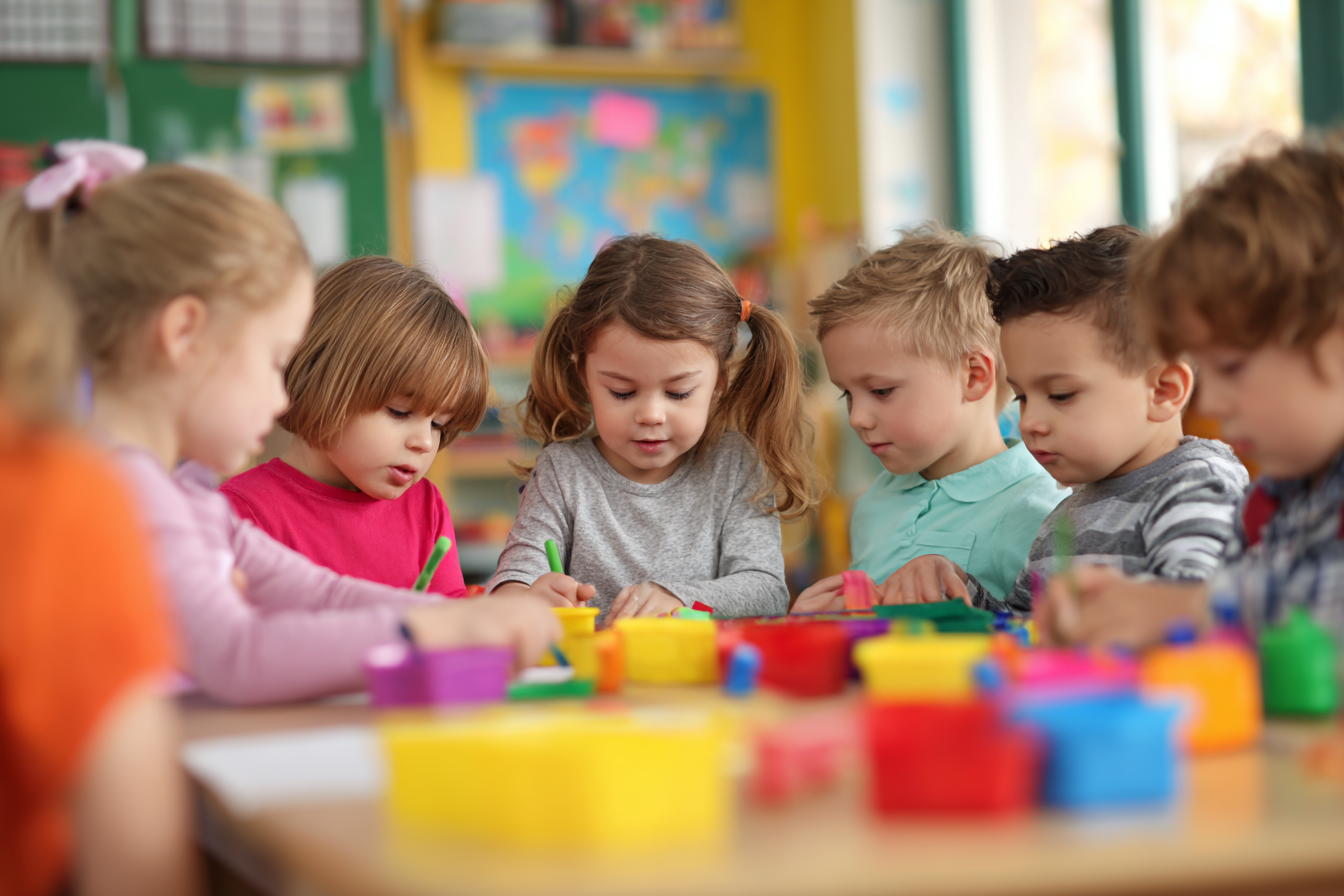
Focus: Present learning across living things, weather, habitats, sunlight, and motion through a joyful science exhibition.
Grade Level: PreK
Subject Area: Science (Physical • Life • Earth/Weather • Engineering)
Total Unit Duration: 5 sessions (one week), 20–30 minutes per session
I. Introduction
In this final synthesis unit, children bring together their favorite investigations from the year—pushes and pulls, sunlight and shade, plants and animals, weather and habitats, and simple building projects. They polish and present their My Environment Models, practice sharing about what they know, and help set up a Science Exhibition for classmates and families. The tone is celebratory, with lots of chances for children to talk, show, and demonstrate their science learning.
Essential Questions
- What do I remember about how things move, how sunlight feels, and how weather changes?
- How do plants and animals get what they need in their habitats?
- How can I show and tell others about what I learned in science this year?
- How do my models, pictures, and words help other people understand my ideas?
II. Objectives and Standards
Learning Objectives — Children will be able to:
- Revisit and describe key science experiences from the year (motion, sunlight, weather, plants, animals, building projects).
- Point to features in their environment models (or other artifacts) and explain how they show habitat, needs, weather, sunlight, and motion.
- Participate in simple demonstrations (push/pull station, weather clothing match, plant care, shade-making) and describe what is happening in child language.
- Share their learning with peers and families by talking, showing, or acting out ideas during a class science exhibition.
- Reflect on what they liked most about science and what they still wonder about.
Standards Alignment — PreK (NGSS-based custom)
- PK-PS2-1 — Explore how pushes and pulls make things move.
- Example: Demonstrating rolling toy cars or balls down a ramp at the motion station.
- PK-PS2-2 — Notice that stronger pushes or pulls change motion.
- Example: Showing guests how a gentle vs. strong push changes how far a car moves.
- PK-PS3-1 — Observe that sunlight warms surfaces.
- Example: Explaining that “the sunny side is warm” in their environment model or photo display.
- PK-PS3-2 — Explore ways to block sunlight and make cooler spaces.
- Example: Using cloth or paper “shade pieces” in models or at a shade-building demo.
- PK-LS1-1 — Observe basic needs of living things (food, water, air, light).
- Example: Pointing out where plants or animals get food and water in their diorama.
- PK-LS1-2 — Notice how living things grow and change over time.
- Example: Sharing before/after photos of a classroom plant or talking about baby vs. grown animals.
- PK-LS1-3 — Observe simple behaviors that help animals survive.
- Example: Acting out birds building nests or animals hiding in their habitat model.
- PK-ESS2-1 — Observe daily weather and describe simple weather patterns.
- Example: Telling visitors about “sunny,” “rainy,” or “snowy” weather shown in their model.
- PK-ESS2-2 — Notice that weather affects clothing and activities.
- Example: Matching weather pictures to clothing in a small-group game during the exhibition.
- PK-ESS3-1 — Recognize ways people can care for the environment.
- Example: Showing trash cans/trees in models and saying, “We throw trash away to help the Earth.”
- PK-ETS1-1 — Pose simple engineering problems from play and stories.
- Example: Remembering and explaining a problem like “The animal needs a shelter so it won’t get wet.”
- PK-ETS1-2 — Build and test simple structures using a variety of materials.
- Example: Showing ramps, shelters, or bridges included in their environment models.
- PK-ETS1-3 — Make changes to improve a design after testing.
- Example: Describing how they “fixed” or added to their model after it tipped or broke.
Success Criteria — Child-Friendly Language
- I can show a model or picture and tell what is happening in my environment.
- I can talk about how things move, how the weather feels, or what plants and animals need.
- I can share my project with classmates and families using words, pointing, or acting.
- I can listen to friends talk about their science and notice something we learned together.
III. Materials and Setup
Materials & Learning Tools
- Children’s My Environment Models (from Unit 35) and any other saved science artifacts (photos, drawings, charts).
- Printed photo cards from earlier investigations: ramps and motion, weather walks, plant care, animal/habitat stories, shade structures, building projects.
- Simple station materials for revisits:
- Motion: ramps, balls/cars, blocks.
- Sunlight/shade (or pretend version with flashlights if indoors): flashlights, cloth, paper “shade,” toy animals/people.
- Plants: plastic plants or classroom plants, watering cans, pretend soil.
- Weather/clothing: weather picture cards, doll clothes or paper clothing pieces.
- Building/engineering: blocks, cups, cardboard pieces, tape.
- Display materials for exhibition:
- Tables for models, name cards, simple labels (“My habitat,” “Weather,” “Sunlight,” “Motion,” “Animals/Plants”).
- Clipboards or sticky notes for teachers/families to jot children’s science language.
- Music player for soft background music during exhibition (optional).
Environment & Setup Tips
- Arrange the room with a “Science Memory Wall” showing photos and children’s work from the year.
- Reserve one area as the Exhibition Zone with low tables so children can reach and show models.
- Set up small revisit stations with clearly labeled baskets and simple picture cues (e.g., ramp picture, sun picture, plant picture).
- Plan for family attendance (if possible): invitations, sign-in, and a simple flow (start at circle, then visit stations/models).
IV. Lesson Procedure
(Each day follows: Welcome Circle → Hands-On Explore → Clean-Up & Share → Closing Reflection.)
Session 1 — Looking Back at Our Science
- Welcome Circle (5–7 min)
- Greet children and briefly review: “This week we will show what we learned in science!”
- Share a short slideshow or picture cards from different investigations.
- Hands-On Explore (15–18 min)
- Lay out mixed science photo cards on the floor or tables.
- In small groups, children sort or group pictures (“things moving,” “weather,” “plants,” “animals,” “building”).
- Teacher prompts: “What is happening? How do you know it’s windy? How do you know the ball is moving?”
- Clean-Up & Share (5–7 min)
- Groups place pictures on a big chart or wall under simple headings (Motion, Weather, Plants, Animals, Building).
- Invite a few children to point and tell about one picture.
- Closing Reflection (3–5 min)
- Turn and talk: “Tell a friend one science thing you remember from this year.”
- Teacher notes key language to use later on labels and sentence starters.
Session 2 — Polishing My Environment Model
- Welcome Circle (5–7 min)
- Show one example environment model and name its parts (“Here is the weather, here is the plant, here is where things move.”).
- Introduce simple picture labels children can add (sun, cloud, plant, animal, arrow for movement, etc.).
- Hands-On Explore (15–20 min)
- Children work on their My Environment Models: add or adjust pieces to show weather, plants/animals, sunlight/shade, and motion.
- Adults confer one-on-one: “What is happening here? What does your animal need? Where is the sun?”
- Encourage children to practice a short share sentence: “In my habitat, the ___ needs ___.”
- Clean-Up & Share (5–7 min)
- Invite 2–3 children to place their models on a “practice display table” and present to the class.
- Peers practice asking simple questions (“What is this? Where does it live?”).
- Closing Reflection (3–5 min)
- Group reflection: “What did you change or add to your model today?”
- Teacher notes common strengths and any gaps (e.g., needs, weather, or motion missing).
Session 3 — Rehearsal: Stations and Presentations
- Welcome Circle (5–7 min)
- Explain: “Tomorrow we will have a Science Exhibition! Today we practice what we’ll show and say.”
- Briefly model how to talk to a visitor: look, point, speak loudly enough, and use a science word.
- Hands-On Explore (15–20 min)
- Children rotate through practice stations:
- Motion ramp station (push/roll objects, describe fast/slow).
- Weather & clothing match station.
- Plant/animal care station (pretend watering, feeding, sheltering).
- Shade-making station (using cloth/paper to cover a toy).
- At each station, they take turns pretending to be the “guide,” explaining what is happening to a teacher or peer.
- Children rotate through practice stations:
- Clean-Up & Share (5–7 min)
- Back at the meeting area, ask: “What will you show at the exhibition? What are you excited to tell your family?”
- Practice a short shared chant or song about science (optional).
- Closing Reflection (3–5 min)
- Choose one simple sentence starter for tomorrow: “In my model, you will see…” or “I learned that…” and have children repeat it.
Session 4 — Science Exhibition Day
- Welcome Circle (5–7 min)
- Welcome visitors (if attending) and explain: “The children will show you their science from this year!”
- Review gentle guidelines with children: “We take turns, we use kind words, we show and tell.”
- Hands-On Explore / Exhibition (20–25 min)
- Children stand by or move between their environment models and selected science stations.
- They explain parts of their models (“This is my plant. It needs water.” “Here is the sun. It makes it warm.”) and demonstrate stations.
- Adults (teachers/families) ask open questions and jot down child quotes on sticky notes or on a class chart.
- Clean-Up & Share (5–7 min)
- After visitors leave, children help carefully move models to a safe storage/display area.
- Short group share: “What did you show? What did your grown-up like?”
- Closing Reflection (3–5 min)
- Quiet circle: each child holds or points to a picture/model and completes “I felt proud when…” or “I liked showing…”.
Session 5 — Remembering and Looking Ahead
- Welcome Circle (5–7 min)
- Revisit the Science Memory Wall and exhibition photos (if available).
- Ask: “What do scientists do? Did we do those things this year?” (look, ask, test, build, draw, explain).
- Hands-On Explore (15–18 min)
- Children create a page for a class science memory book (drawing a favorite investigation or model, dictating a sentence).
- Optional: Small group “ask the scientist” game where children answer simple “how/why” questions using earlier pictures.
- Clean-Up & Share (5–7 min)
- Share some memory-book pages and put them together into one class book.
- Take a group photo with the book and, if possible, some models.
- Closing Reflection (3–5 min)
- Final circle: children pass around a “scientist badge” or plush and say one thing they are curious about for next year.
V. Differentiation and Family Connections
Support for All Learners
- Offer visual sentence stems on cards: “This is my ___.” “It needs ___.” “The weather is ___.”
- Allow children to share in different ways: pointing, acting, single words, or short phrases—all count as science communication.
- Provide extra adult support at stations for children who need help with turn-taking or transitions.
Multilingual Learners
- Encourage use of home language with families; invite caregivers to help translate children’s explanations if they wish.
- Provide picture labels in English plus key words in common home languages.
- Accept drawings plus a few spoken words as evidence of understanding.
Family & Community Connections
- Invite families to send in photos of outdoor play, weather days, pets, or gardens to add to the Science Memory Wall.
- Share a short family note describing what children practiced and simple questions families can ask at home (“What did your model show?”).
- If possible, send home a copy or photo of the child’s memory-book page.
VI. Assessment and Documentation
Formative Observations (throughout the week)
- Note which children can name and describe elements in their models (animals, plants, weather, sun, motion).
- Listen for science vocabulary and ideas during station practice and exhibition (push, roll, sunny, rainy, shade, needs, habitat).
- Capture children’s comments on sticky notes or checklists linked to standards.
Summative — Cumulative Science Portfolio & Exhibition Share (0–2 per criterion, total 8)
- Science Ideas in Model/Work (Across Strands)
- 2: Child’s model/work clearly shows more than one science idea (e.g., habitat, needs, weather/sun, motion) and child can briefly describe at least two.
- 1: Model/work shows one clear science idea and child can name or partly describe it.
- 0: Model/work does not clearly connect to science ideas, or child is unable to talk about it even with support.
- Oral/Action Sharing of Learning
- 2: Child confidently shares with peers/families using words, pointing, or actions; can answer at least one simple question about their work.
- 1: Child shares a small part of their work with support (prompting, modeling) or mostly uses gestures but shows some connection.
- 0: Child refuses or is unable to share even with support on exhibition day.
- Use of Science Practices (Notice, Ask, Explain)
- 2: Child is observed noticing, asking questions, or explaining during stations/exhibition (e.g., “It rolls faster,” “It’s sunny so we need shade”).
- 1: Child occasionally participates in noticing or simple explaining when prompted.
- 0: Little evidence of child using science practices during the week.
- Engagement and Persistence in Science Tasks
- 2: Child stays engaged at models/stations, returns to tasks, and persists even when materials fall or need adjusting.
- 1: Child participates briefly but may need reminders; engagement is uneven.
- 0: Child rarely engages with science tasks, even with adult encouragement.
Feedback Protocol (TAG)
- Tell one strength: “You showed your plant and explained it needs water. That was clear.”
- Ask one wondering: “What kind of weather does your animal like in this habitat?”
- Give one suggestion: “Next time, you might point to the sun when you tell how it keeps things warm.”
Standards Trace — When Each Standard Is Addressed
- PK-PS2-1–2 (pushes, pulls, stronger/weaker) — Revisited in motion station and model explanations about how things move (Sessions 1, 3, 4).
- PK-PS3-1–2 (sunlight warms, making shade) — Highlighted in environment models showing sunny vs. shady spots and shade-making demos (Sessions 2–4).
- PK-LS1-1–3 (needs, growth, simple behaviors) — Emphasized in model features for plants/animals and explanations of what they need/do to live (Sessions 2–4).
- PK-ESS2-1–2 (weather, clothing, activities) — Used in weather/clothing games, model weather scenes, and exhibition talks (Sessions 1–4).
- PK-ESS3-1 (caring for environment) — Shown in model features like trash cans, trees, and water, and in child comments about “helping the Earth” (Sessions 2–4).
- PK-ETS1-1–3 (posing problems, building, improving) — Recalled when children describe how they built and fixed ramps, shelters, or habitat structures in models and at stations (Sessions 2–4).