Unit Plan 1 (PreK Social Studies): Building Our Classroom Community
Build a caring PreK community where kids learn routines, share, take turns, and help keep the classroom safe, kind, and welcoming for everyone.

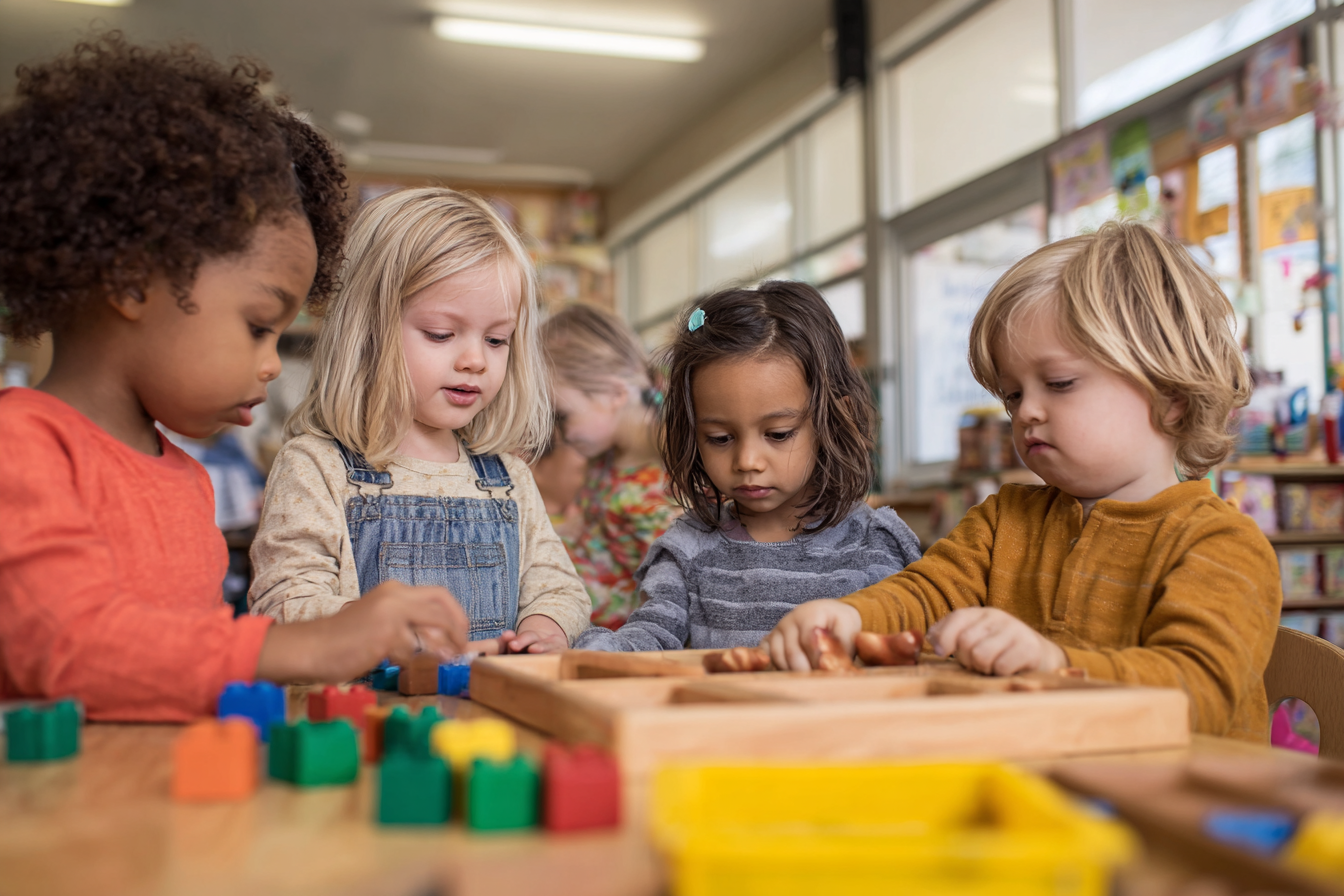
Focus: Help children feel safe, known, and included in their new classroom community. Students learn classroom routines, practice kindness rules, and build habits of taking turns, sharing materials, and cleaning up together. Through stories, songs, and play, they begin asking simple “who/what/where/why” questions about classroom rules and helpers.
Grade Level: PreK
Subject Area: Social Studies (Civics • Inquiry • Community)
Total Unit Duration: 5 sessions (one week), 15–20 minutes per session
I. Introduction
In this opening unit, children are welcomed as important members of a PreK classroom team. They explore what it feels like when a classroom is safe, fair, and kind, and they learn that rules and routines help everyone learn and play together. Through circle time, simple games, and guided practice, students begin to follow everyday routines—lining up, using materials, cleaning up, and using gentle hands and kind words.
Essential Questions
- How can we make our classroom a safe and happy place?
- Why do we have rules and routines at school?
- What does it look and sound like when we are kind, fair, and sharing?
- Who helps us at school, and how do we help each other?
II. Objectives and Standards
Learning Objectives — Students will be able to:
- Follow key classroom routines (lining up, sitting at circle, using centers, cleaning up) with visual and adult support.
- Name or point to at least one classroom rule that keeps everyone safe or kind (e.g., “We use walking feet.”).
- Practice taking turns and sharing materials during simple games and center time with adult modeling.
- Show care and responsibility by helping clean up and treating classmates kindly.
- Ask or answer simple “who/what/where/why” questions about classroom rules, people, and places.
Standards Alignment — PreK (C3-based custom)
- PK.C3.Civ.1 — Follow classroom routines and rules; understand that rules keep us safe, fair, and kind.
- Example: Taking turns during centers or lining up safely for recess.
- PK.C3.Civ.5 — Show care and responsibility for the classroom community; help clean up, share materials, and treat others with respect.
- Example: Returning blocks to the correct shelf after play.
- PK.C3.Inq.1 — Ask and answer simple questions about the world using “who/what/where/why” to learn about people and places.
- Example: “Why do we have stop signs?” or “Who helps us in the cafeteria?”
Success Criteria — Student Language
- I can follow our classroom rules with help from grown-ups and pictures.
- I can take turns and share toys or materials during play.
- I can help clean up our classroom when it’s time.
- I can ask or answer a simple question about our classroom (who, what, where, why).
III. Materials and Resources
Tasks & Tools (teacher acquires/curates)
- Picture books about school, routines, and kindness (e.g., first-day-of-school stories, friendship stories).
- Visual supports:
- Picture schedule of the day’s routine.
- Simple rule cards with images (walking feet, quiet voice, gentle hands, taking turns).
- Photos or icons of classroom helpers (teacher, aide, custodian, nurse).
- Chart paper for:
- “Our Classroom is a Team” anchor chart (with photos/drawings of students).
- “Our Kindness Rules” chart with simple icons.
- Materials for activities:
- Blocks, crayons, playdough, and other center materials to practice taking turns and sharing.
- Clean-up baskets, labeled bins, and shelves.
- Song/chant ideas for clean-up, circle time, and lining up.
Preparation
- Arrange the room into clear center areas with labeled bins/shelves.
- Post or prepare visuals for routines: arrival, circle, centers, snack, clean-up, line-up.
- Prepare a short list of 3–5 positively stated rules (e.g., “We use gentle hands,” “We use walking feet,” “We share and take turns.”).
- Decide on one or two simple games that require taking turns (passing a ball, roll-and-share game, etc.).
Common Misconceptions to Surface
- Rules are “just to stop fun” rather than to keep everyone safe and happy.
- Sharing means “I never get it back,” instead of “we take turns with toys and materials.”
- Clean-up is only the teacher’s job, not the job of the whole classroom community.
Key Terms (highlight in lessons) rule, routine, safe, kind, share, take turns, classroom, teacher, helper
IV. Lesson Procedure
(Each day uses: Launch → Explore → Discuss → Reflect, in 15–20 minutes.)
Session 1 — Welcome to Our Classroom Team (PK.C3.Civ.1, PK.C3.Civ.5, PK.C3.Inq.1)
- Launch (5 min)
- Welcome students to PreK and introduce the idea: “We are a classroom team. We help each other.”
- Read a short picture book about starting school or being part of a class.
- Explore (7–10 min)
- Show photos or drawings of different classroom places (circle area, centers, cubbies, bathroom line).
- Ask simple questions: “Where do we sit for circle?” “Who helps us at school?”
- Start an anchor chart “Our Classroom is a Team” with student names or photos around a big heart or school icon.
- Discuss (3–5 min)
- Briefly introduce one or two key routines (e.g., how to come to circle, how to sit on the rug) and practice them once.
- Reflect (2–3 min)
- Sentence frame with visual support: “I can help our classroom by __.” (e.g., listening, sitting on my spot, helping a friend).
Session 2 — Why We Have Rules (PK.C3.Civ.1, PK.C3.Inq.1)
- Launch (5 min)
- Show two simple pictures: one of children running and bumping, and one of children walking safely in line.
- Ask: “Which picture looks safe? Why?”
- Explore (7–10 min)
- Read or tell a short story about rules keeping everyone safe (e.g., walking inside, using gentle hands).
- Introduce 3–5 picture rules (walking feet, quiet voice, gentle hands, taking turns, cleaning up).
- Act out quick examples: teacher models safe and unsafe behaviors; students identify which follows rules.
- Discuss (3–5 min)
- Make a “Our Kindness Rules” chart with simple phrases and pictures.
- Ask: “Why do we have this rule?” and record student ideas (even very simple ones).
- Reflect (2–3 min)
- Choose one rule and repeat together: “We use gentle hands.” Children give a thumbs-up if they can try this today.
Session 3 — Taking Turns and Sharing (PK.C3.Civ.1, PK.C3.Civ.5, PK.C3.Inq.1)
- Launch (5 min)
- Show a favorite toy or material and ask: “What happens if everyone wants this at the same time?”
- Explain that in our classroom, we take turns and share to be fair and kind.
- Explore (7–10 min)
- Model a simple taking-turns game (e.g., passing a ball around the circle, one child at a time building with a block or choosing a color).
- Each child practices saying or hearing a simple phrase like “My turn,” “Your turn,” “Can I have a turn?” with adult help.
- Discuss (3–5 min)
- Ask: “How did it feel when we took turns?”
- Connect back to rules: “Our rules help us share and feel good in our classroom.”
- Reflect (2–3 min)
- Sentence frame: “I can share __ with my friends.” Children name a toy/material.
Session 4 — Caring for Our Classroom Space (PK.C3.Civ.5, PK.C3.Civ.1, PK.C3.Inq.1)
- Launch (5 min)
- Show a messy picture of a classroom and a tidy one. Ask: “Which one looks ready for learning? Why?”
- Explore (7–10 min)
- Take a short “Classroom Tour” to show where items belong—blocks shelf, art supplies, book bin.
- Model a clean-up routine with a song or chant (“Clean up, clean up…”), demonstrating how to put things back in the right place.
- Practice a mini clean-up: let students use materials briefly, then practice cleaning up with adult guidance.
- Discuss (3–5 min)
- Add to the kindness rules chart: “We help clean up” with a picture of children cleaning.
- Ask: “Who helps keep our classroom clean?” Elicit “We do!” along with teacher and helpers.
- Reflect (2–3 min)
- Children touch or point to a picture of themselves on the “Our Classroom is a Team” chart and say, “I help our classroom.”
Session 5 — Our Classroom Promise (PK.C3.Civ.1, PK.C3.Civ.5, PK.C3.Inq.1)
- Launch (5 min)
- Review all visuals: “Our Classroom is a Team,” “Our Kindness Rules,” and photos of routines.
- Tell students they will make a classroom promise together.
- Explore (7–10 min)
- On chart paper, write a simple “Our Classroom Promise” with pictures, for example:
- “We use gentle hands.”
- “We use walking feet inside.”
- “We share and take turns.”
- “We help clean up.”
- Invite children to add handprints, thumbprints, or stickers around the promise to “sign” it.
- On chart paper, write a simple “Our Classroom Promise” with pictures, for example:
- Discuss (3–5 min)
- Practice saying the promise as a group.
- Ask simple questions: “What is one rule you remember?” “Where do we use walking feet?”
- Reflect (2–3 min)
- Each child completes (verbally with support) one of these frames:
- “I can help by __.”
- “I feel happy when our classroom is __ (safe, kind, clean).”
- Each child completes (verbally with support) one of these frames:
V. Differentiation and Accommodations
Advanced Learners
- Invite them to help model routines (e.g., demonstrate lining up or gentle hands).
- Let them suggest an additional kindness rule or example for the chart.
- Encourage them to lead a short “clean-up captain” role, reminding friends where items go.
Targeted Support
- Use clear, consistent visual cues (gesture, picture cards) for each routine and rule.
- Provide first/then language (“First clean up, then story time”) with visual supports.
- Offer extra practice in a small group for taking turns, using role-play with puppets.
Multilingual Learners
- Pair pictorial rules with home-language words when possible (e.g., labels or simple phrases).
- Allow students to demonstrate understanding nonverbally (pointing, modeling) while gradually adding simple English phrases.
- Encourage peers to model simple sentences like, “My turn,” “Your turn,” for them to echo.
IEP/504 & Accessibility
- Provide visual schedules, timers, or tangible cues for transitions and routines.
- Offer seating supports (e.g., carpet square, wobble cushion) to help students stay engaged at circle.
- Allow alternative participation during games (e.g., tapping instead of catching the ball, using an AAC button to say “My turn”).
VI. Assessment and Evaluation
Formative Checks (daily)
- Session 1: Do students begin to follow a basic circle routine (coming to rug, sitting in a spot) with visual/adult support?
- Session 2: Can students identify or point to at least one classroom rule and show a simple example with modeling?
- Session 3: During a turn-taking game, can students wait briefly and participate in taking turns with reminders?
- Session 4: Do students respond to the clean-up cue and return at least one item to a bin or shelf with support?
- Session 5 (formative within summative): Can most students name or act out one rule or way they care for the classroom community?
Summative — “PreK Classroom Community Member” Rubric (0–2 per criterion, total 10)
- Follows Classroom Rules and Routines (PK.C3.Civ.1)
- 2: Usually follows key routines (circle, line-up, clean-up) and class rules with few adult reminders.
- 1: Follows some routines/rules with frequent prompts or modeled support.
- 0: Has difficulty following routines/rules even with consistent adult support.
- Kindness, Sharing, and Turn-Taking (PK.C3.Civ.5)
- 2: Regularly shows kindness (gentle hands, kind words), shares or takes turns during play with prompts.
- 1: Sometimes shows kindness and sharing; needs frequent reminders to take turns or use gentle hands.
- 0: Often struggles to share or use gentle hands, even with adult support.
- Participation in Community Activities (PK.C3.Civ.5)
- 2: Actively participates in circle discussions, games, and clean-up; contributes at least once per session (verbally or nonverbally).
- 1: Participates inconsistently; may join some activities but often needs encouragement.
- 0: Rarely participates in community activities, even with adult support.
- Asking/Answering Questions About Rules and Classroom (PK.C3.Inq.1)
- 2: Asks or answers simple who/what/where/why questions about people, places, or rules with support.
- 1: Responds nonverbally or with one-word answers; needs significant prompting to engage with questions.
- 0: Does not ask/answer questions about classroom routines or helpers, even with modeling.
- Responsibility for Classroom Space (PK.C3.Civ.5)
- 2: Consistently helps clean up at transition times and shows care for materials and space.
- 1: Sometimes helps clean up; needs reminders or one-on-one support.
- 0: Rarely helps with clean-up, even when prompted and assisted.
Feedback Protocol (TAG)
- Tell a strength: “You did a great job using walking feet in the hallway.”
- Ask a question: “How did you help a friend share today?”
- Give a suggestion: “Next time, try using our words to ask for a turn with the toy.”
VII. Reflection and Extension
Reflection Prompts
- What is one rule that helps our classroom be safe and kind?
- How did you help our classroom team today?
- How does it feel when friends share and take turns with you?
Extensions
- Home Connection: Send a simple note or picture explaining the classroom rules and invite families to talk about rules at home (bedtime, crossing the street).
- Classroom Jobs: Introduce very simple jobs (line leader, door holder, clean-up helper) to reinforce responsibility.
- Ongoing Visual Supports: Keep the “Our Classroom is a Team” and “Our Kindness Rules” charts posted and refer to them daily during transitions.
VIII. Standards Trace — When the Standards Are Addressed
- PK.C3.Civ.1 — Follow classroom routines and rules; understand that rules keep us safe, fair, and kind.
- Introduced in Sessions 1–2 (circle routine, rule visuals); practiced in Sessions 3–5 (turn-taking games, clean-up, classroom promise).
- PK.C3.Civ.5 — Show care and responsibility for the classroom community.
- Highlighted in Sessions 1, 3, and 4 (kindness, sharing, cleaning up), and reinforced in Session 5 (classroom promise and reflection).
- PK.C3.Inq.1 — Ask and answer simple questions about the world using “who/what/where/why.”
- Modeled and practiced across Sessions 1–5 as children respond to questions about rules, helpers, places, and routines and begin to ask their own simple questions.