Unit Plan 36 (PreK Social Studies): Cumulative Synthesis & Exhibition
Celebrate PreK learning with a fun “World Fair” showcasing family stories, helpers, maps, places, and traditions through student-made exhibits.

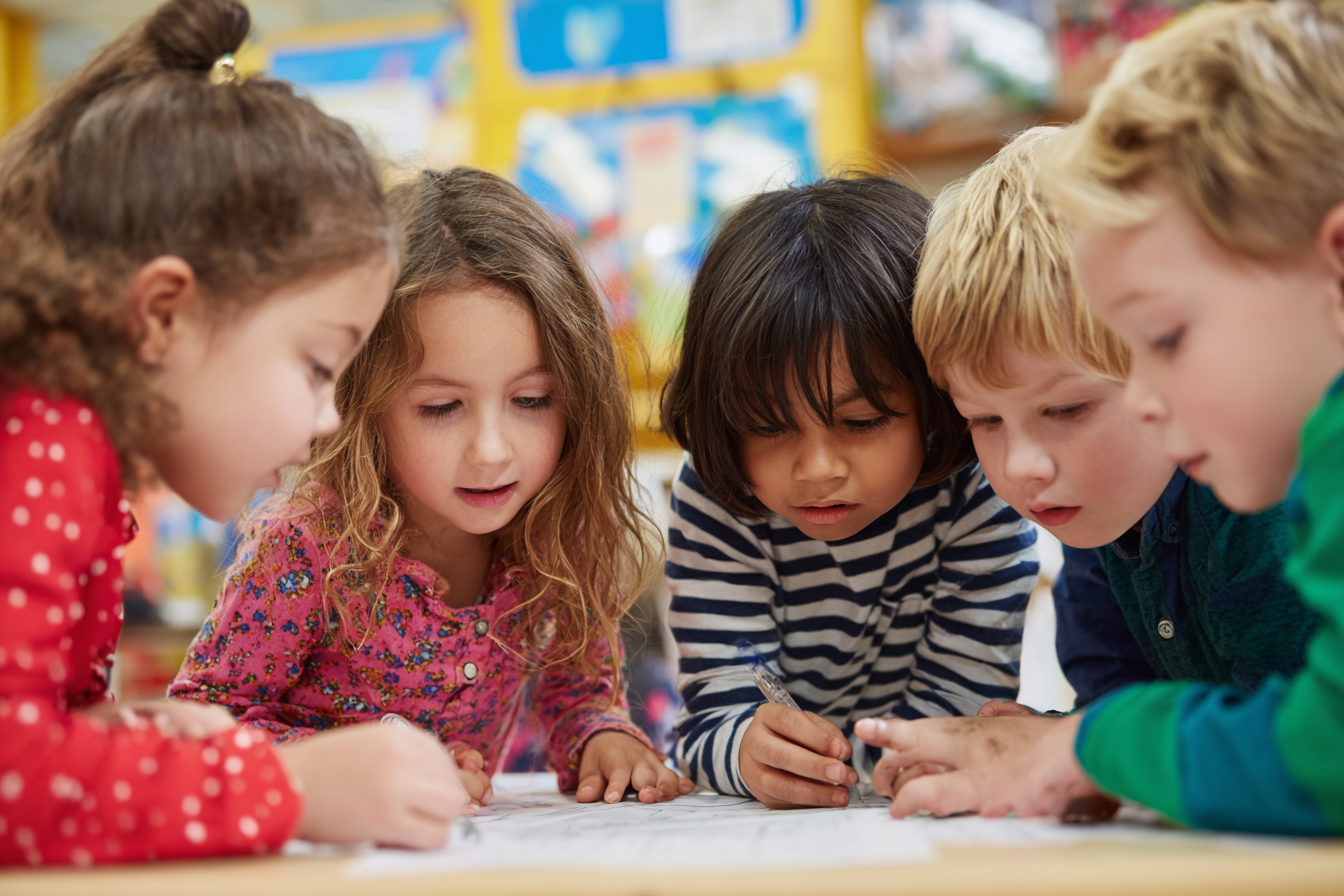
Focus: Help children revisit and celebrate what they’ve learned about family stories, class rules, helpers, places, maps, weather, resources, and celebrations by preparing a simple “World Fair” event with stations that show their learning.
Grade Level: PreK
Subject Area: Social Studies (Inquiry • Civics • Geography • History • Economics)
Total Unit Duration: 5 sessions (one week), 15–20 minutes per session
I. Introduction
In this culminating unit, children bring together everything they’ve learned about themselves and their world: their families, classroom rules and routines, helpers at school and in the community, maps and places, and traditions and celebrations. Through guided review, choice, and play, they create simple exhibits (drawings, photos, class charts, and artifacts) for a “World Fair” in the classroom.
Children practice talking about their learning using pictures, maps, and simple language (“first, next, last”; “near, next to”; “helper,” “needs and wants”). They then proudly share their work with classmates, teachers, and invited guests, reinforcing a sense of belonging, responsibility, and curiosity about the world.
Essential Questions
- What have we learned this year about our classroom, helpers, families, and places?
- How can we show and tell others what we know?
- How do our family stories, maps, and traditions show who we are and where we live?
- How can we work together to create a World Fair that helps others learn from us?
II. Objectives and Standards
Learning Objectives — Students will be able to:
- Recall and share at least one idea from earlier units (e.g., rule, helper, place, celebration, need vs. want).
- Help choose and create visuals or artifacts (drawings, charts, maps, photos) for a World Fair station.
- Use simple inquiry language to talk about their learning (“I wondered…,” “I learned…”).
- Demonstrate civics skills such as turn-taking, listening, and caring for materials during preparation and sharing.
- Name or point to at least one familiar place on a simple map or picture and describe something about it.
- Share a family or classroom story, tradition, or celebration with a peer or guest.
- Show basic understanding of helpers and resources (workers, tools, needs) through drawings, play, or talk.
Standards Alignment — PreK (C3-based custom, spiral review)
- PK.C3.Inq.1–4 — Inquiry and communication. Ask and answer simple questions, explore information through observation and play, share learning with pictures and talk, and participate in simple class projects.
- PK.C3.Civ.1–5 — Civics and community. Follow rules and routines, identify helpers, participate in group decisions, recognize symbols, and show care/responsibility for the classroom community.
- PK.C3.Geo.1–5 — Geography and place. Identify familiar places, use simple maps and models, describe where things are with position words, observe the environment, and compare features of different places.
- PK.C3.Hist.1–5 — History and time. Tell personal events in order, recognize change over time, identify important people and celebrations, share family and cultural traditions, and listen to and retell past stories.
- PK.C3.Econ.1–5 — Economics and resources. Identify basic needs and wants, recognize jobs and workers, understand that people work to get what they need, practice sharing/trading, and describe how people use resources.
Success Criteria — Student Language
- I can show and tell something I learned about rules, helpers, places, or families.
- I can help make a picture, map, or project for our World Fair.
- I can tell a short story about my day, my family, or a helper.
- I can use words and pictures to help others learn about my world.
III. Materials and Resources
Tasks & Tools (teacher acquires/curates)
- Collections from earlier units (reuse as much as possible):
- Anchor charts (rules, helpers, neighborhood places, weather, needs & wants).
- Classroom and simple maps made by children.
- Drawings of families, homes, and traditions.
- Photos of classroom activities, walks, and celebrations.
- New materials:
- Construction paper, drawing paper, crayons, markers, glue sticks.
- Large poster boards labeled: “Our Classroom Rules,” “Helpers,” “Places & Maps,” “Family Stories,” “Traditions & Celebrations,” “Needs & Wants.”
- Simple “My Learning Card” templates: “I learned __. I can show __.”
- Space set aside for World Fair stations (tables, rug areas, or wall sections).
Preparation
- Gather and sort previous charts and student work into categories (rules & civics, helpers, maps & places, history/family, economics/needs & wants).
- Decide on 3–5 World Fair stations (e.g., Rules & Routines, Helpers, Maps & Places, Families & Traditions, Needs & Wants).
- Prepare simple station labels with pictures so children can recognize each area.
- Print or copy any family photos or previous work you want to display.
Common Misconceptions to Surface
- Thinking the World Fair is only about “new” work, not celebrating what they have already learned.
- Confusing family traditions with rules (“We must eat pizza every Friday!”) instead of seeing them as customs.
- Believing maps are just pictures and not tools that show where things are.
Key Terms (highlight in lessons) rules, helpers, map, place, family, story, tradition, needs, wants, World Fair, station
IV. Lesson Procedure
(Each day uses: Launch → Explore → Discuss → Reflect, in 15–20 minutes.)
Session 1 — Remembering Our Learning (Inquiry & Civics Review)
- Launch (5 min)
- Show a few old charts (class rules, helpers, neighborhood places, needs and wants).
- Ask: “What do you remember learning about our classroom and our world?”
- Explore (7–10 min)
- Lay out charts and photos on the rug. Invite children to gently walk around, point, and talk with a partner:
- “I remember when we __.”
- “We learned about __.”
- Start a new chart: “What We Learned This Year”, adding child ideas with small sketches.
- Lay out charts and photos on the rug. Invite children to gently walk around, point, and talk with a partner:
- Discuss (3–5 min)
- Highlight that they learned about rules, helpers, places, families, and celebrations.
- Explain: “We will use these ideas to create our World Fair for visitors.”
- Reflect (2–3 min)
- Prompt: “One thing I remember learning is __.”
Session 2 — Planning Our World Fair Stations (Geo, Civics, Econ, Hist)
- Launch (5 min)
- Show the prepared station labels (e.g., Rules, Helpers, Places & Maps, Family Stories, Needs & Wants).
- Briefly remind children what goes with each station.
- Explore (7–10 min)
- As a class, decide what goes at each station:
- Rules: class rules chart, photos of routines.
- Helpers: drawings of helpers, hats/tools props, thank-you cards.
- Places & Maps: classroom maps, neighborhood drawings, “Our Place in the World” pages.
- Family Stories & Traditions: family drawings, celebration art.
- Needs & Wants: picture cards, simple sorting mat.
- Let children help carry and place a few items at the right station.
- As a class, decide what goes at each station:
- Discuss (3–5 min)
- Ask: “What can people see and learn at each station?”
- Model simple language: “At the Helpers station, visitors learn about people who help us.”
- Reflect (2–3 min)
- Prompt: “At our World Fair, I want to help at the __ station.”
Session 3 — Creating and Finishing Our Exhibits (Inquiry, Geo, Hist, Econ)
- Launch (5 min)
- Review the stations and ask: “What do we still need to make for our World Fair?”
- Explore (7–10 min)
- Children rotate through 1–2 mini-creation tasks (teacher-guided):
- Add a new drawing of a helper or family tradition.
- Decorate a small map or “My Place in the World” circle.
- Create a simple needs vs. wants sorting picture.
- Teacher or assistant helps staple/tape new work to the correct station boards.
- Children rotate through 1–2 mini-creation tasks (teacher-guided):
- Discuss (3–5 min)
- Walk as a class to preview stations: “What can visitors see here?”
- Practice a short explanation as a group at one station (e.g., “These are our rules that keep us safe and kind.”).
- Reflect (2–3 min)
- Prompt: “Today I made __ for our World Fair.”
Session 4 — Practicing Sharing at the World Fair (Inquiry & Civics)
- Launch (5 min)
- Explain that today is a practice World Fair just for the class.
- Remind children about kind listening, waiting turns, and using quiet voices when others speak.
- Explore (7–10 min)
- Half of the class stands by or near a station as “guides”, while the other half walks around as “visitors.”
- Guides practice simple phrases (with teacher support):
- “This is our __ station.”
- “We learned about __.”
- After a few minutes, roles switch so everyone gets to be guide and visitor.
- Discuss (3–5 min)
- Ask: “How did it feel to be a guide? What did you like seeing as a visitor?”
- Reinforce positive behaviors: sharing, waiting, listening.
- Reflect (2–3 min)
- Prompt: “When I was a guide, I told visitors about __.”
Session 5 — World Fair Event (Culminating Exhibition)
- Launch (5 min)
- Review expectations: gentle voices, staying with the class, being kind to visitors.
- Introduce any guests (if present) and explain that children will show what they know.
- Explore (7–10 min)
- Open the World Fair:
- Visitors walk through at least a few stations.
- Children stand by stations or walk with the teacher, pointing to their work and sharing short sentences.
- Encourage children to use phrases like:
- “I learned about __.”
- “This is my picture of __.”
- Open the World Fair:
- Discuss (3–5 min)
- After visitors leave, gather on the rug to celebrate: clap for the class, name favorite parts of the Fair.
- Reflect (2–3 min)
- Prompt: “At our World Fair, I showed __ and I felt __.”
V. Differentiation and Accommodations
Advanced Learners
- Invite them to help explain a station to visitors using more than one sentence.
- Encourage them to connect ideas: “Our rules help us be kind. Our helpers help us stay safe.”
- Let them act as peer buddies to support classmates at stations.
Targeted Support
- Provide visual sentence stems with icons:
- “I learned __.”
- “This is __.”
- Allow children who are shy to share one-on-one with a teacher or peer instead of a large group.
- Use picture choices so children can point to what they want to show rather than naming everything verbally.
Multilingual Learners
- Encourage sharing a word or phrase about their family, celebration, or place in their home language, then in English if they are comfortable.
- Pair them with a supportive buddy who can help model station language.
- Use photos from diverse families and places to build connections to home cultures.
IEP/504 & Accessibility
- Provide extra time and quiet space if the World Fair feels overwhelming.
- Offer alternate roles: holding a sign, handing a picture to a guest, or pressing a button on a voice-output device.
- Use adapted materials (larger print, tactile elements) on station boards for students with visual or sensory needs.
VI. Assessment and Evaluation
Formative Checks (daily)
- Session 1: Does the child recall or recognize at least one past concept (rule, helper, place, family/celebration, needs/wants)?
- Session 2: Can the child help match work or objects to the correct station (rules, helpers, maps, families, needs & wants)?
- Session 3: Does the child create or add one piece of work for a station with some explanation?
- Session 4: As a “guide,” can the child use a simple phrase like “This is __” or “We learned about __”?
- Session 5: During the World Fair, does the child show engagement by pointing, talking, or otherwise sharing with at least one person?
Summative — “World Fair” Synthesis Rubric (0–2 per criterion, total 10)
- Recalls Key Social Studies Ideas (PK.C3.Inq, Spiral)
- 2: Shares two or more ideas from the year (rules, helpers, places, families, needs/wants) with words, pictures, or gestures.
- 1: Shares one idea with prompting.
- 0: Does not recall or share any idea, even with support.
- Participation in World Fair Preparation (PK.C3.Civ.1–3, PK.C3.Inq.2–3)
- 2: Actively helps set up or create work for at least one station (carrying, gluing, drawing) and follows basic directions.
- 1: Participates briefly or with frequent prompts.
- 0: Rarely participates, even with encouragement and support.
- Use of Visuals and Maps to Communicate (PK.C3.Geo.1–3)
- 2: Uses or points to maps, drawings, or pictures to talk about a place or idea (e.g., “This is our classroom map”).
- 1: Points to visuals but needs strong teacher scaffolding to explain them.
- 0: Does not use visuals or maps meaningfully, even with support.
- Sharing Personal or Family Story/Tradition (PK.C3.Hist.1, PK.C3.Hist.4–5)
- 2: Shares a simple family or classroom story or tradition (with or without support), using words, pictures, or gestures.
- 1: Responds minimally about family or celebrations only after repeated prompting.
- 0: Does not share about family or traditions, even with support.
- Civic and Social Behaviors During Exhibition (PK.C3.Civ.3, PK.C3.Civ.5)
- 2: Shows kindness, turn-taking, and care for materials and people throughout the World Fair (e.g., listening, gentle hands).
- 1: Shows some appropriate behavior but needs reminders and support.
- 0: Frequent difficulties following expectations, even with consistent support.
Feedback Protocol (TAG)
- Tell a strength: “You showed your family drawing and told us about your celebration—that was wonderful!”
- Ask a question: “Which station did you like sharing at the most?”
- Give a suggestion: “Next time, you could try telling one more thing you learned about helpers or places.”
VII. Reflection and Extension
Reflection Prompts
- What was your favorite station at our World Fair? Why?
- What is one thing you are proud to show or tell from this year?
- How did we work together to make our World Fair happen?
Extensions
- Family Follow-Up: Send home a short note inviting families to ask, “What did you show at your World Fair?” and draw or write a response together.
- Class Memory Book: Bind photos from the World Fair and copies of child work into a class memory book titled “Our PreK World.”
- Buddy Fair: If possible, invite another class (older or younger) to visit the World Fair displays on another day so children can practice sharing again in a simpler format.
VIII. Standards Trace — When the Strands Are Addressed
- PK.C3.Inq (Inquiry):
- Sessions 1–5 as children recall learning, plan stations, create exhibits, and share with visitors; assessed especially in rubric criteria 1–3.
- PK.C3.Civ (Civics):
- Sessions 1–5 through rule-following, helping, sharing roles, and showing respect; assessed in criteria 2 and 5.
- PK.C3.Geo (Geography):
- Sessions 2–3 and 5 via maps, place charts, and “Our Place in the World” work; reflected in criteria 1–3.
- PK.C3.Hist (History):
- Sessions 1, 3, 4, 5 with family stories, celebrations, and personal timelines or stories; assessed in criteria 1 and 4.
- PK.C3.Econ (Economics):
- Sessions 1–3 through review of needs/wants, workers, and resources at related stations; partly reflected in criteria 1–3.