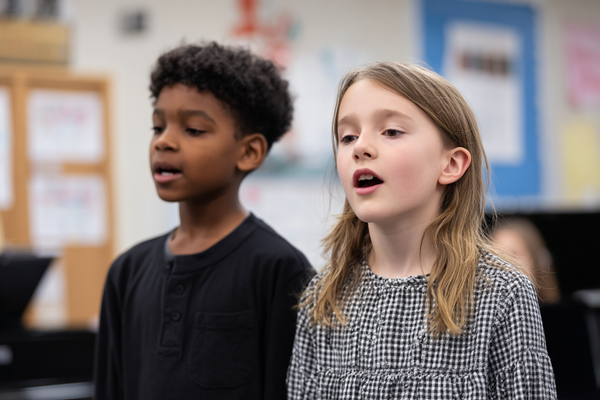
Paid-members only Grade 4 Music Units Unit Plan 15 (Grade 4 Music): Expressive Singing & Playing Grade 4 music unit where students use tempo, dynamics, and timbre to shape expressive melodic performances in singing and playing.
Paid-members only Grade 4 Music Units Unit Plan 14 (Grade 4 Music): Notating Melodic Ideas Grade 4 music unit where students use iconic and standard notation to write simple melodic ideas, connecting what they hear, sing, and play to what they see on the page.
Paid-members only Grade 4 Music Units Unit Plan 13 (Grade 4 Music): Melodic Improvisation Grade 4 music unit where students improvise short melodies to express mood and context, then select and organize ideas into simple structures they can perform and explain.
Paid-members only Grade 4 Music Units Unit Plan 12 (Grade 4 Music): Simple Harmony & Accompaniment Grade 4 music unit where students create simple accompaniment patterns, exploring drones, borduns, and harmony to support melodies and change musical meaning.
Paid-members only Grade 4 Music Units Unit Plan 11 (Grade 4 Music): Major & Minor Tonality Grade 4 music unit where students create melodies in major and minor, using tempo and dynamics to shape mood and explain expressive meaning.
Paid-members only Grade 4 Music Units Unit Plan 10 (Grade 4 Music): Melodic Direction & Contour Grade 4 music unit exploring melodic contour through singing, instruments, and movement, helping students explain how pitch direction shapes musical meaning.
Paid-members only Grade 4 Music Units Unit Plan 9 (Grade 4 Music): Rhythm Performance Etiquette Grade 4 music unit teaching performance decorum and audience etiquette through rhythm performances, modeling posture, focus, listening, and appropriate applause.
Paid-members only Grade 4 Music Units Unit Plan 8 (Grade 4 Music): Rhythm Ensemble Performance Grade 4 music unit where students rehearse and perform rhythm ensemble pieces with accuracy, steady beat, expressive dynamics, and strong performance etiquette.
Paid-members only Grade 4 Music Units Unit Plan 7 (Grade 4 Music): Expressive Rhythm Grade 4 music unit where students change rhythm mood using dynamics and tempo, performing, listening, and explaining expressive choices with music vocabulary.
Paid-members only Grade 4 Music Units Unit Plan 6 (Grade 4 Music): Notating Rhythm & Harmony Grade 4 music unit where students document rhythmic and simple harmonic ideas using notation or recordings, adding drones and explaining how ideas can be recreated.
Paid-members only Grade 4 Music Units Unit Plan 5 (Grade 4 Music): Creating Rhythmic Ideas Grade 4 music unit where students improvise rhythmic ideas for a purpose, organize patterns, perform with steady beat, and explain rhythm–context connections.
Paid-members only Grade 4 Music Units Unit Plan 4 (Grade 4 Music): Rhythm in Context Grade 4 music unit exploring how rhythm supports style, dance, and purpose, and how context shapes performance choices through listening and movement.
Paid-members only Grade 4 Music Units Unit Plan 3 (Grade 4 Music): Reading Rhythm Patterns Build Grade 4 rhythm literacy with this unit on reading and performing standard rhythmic notation in duple and triple meter, using counting strategies, body percussion, instruments, and collaborative practice to strengthen steady beat and ensemble accuracy.
Paid-members only Grade 4 Music Units Unit Plan 2 (Grade 4 Music): Steady Beat & Meter Review Explore steady beat and duple vs. triple meter through movement, instruments, and listening in this Grade 4 music unit focused on rhythm, structure, and musical response.
Grade 4 Music Units Unit Plan 1 (Grade 4 Music): Music Routines & Listening Grade 4 music unit building rehearsal routines, listening focus, and performance etiquette while connecting music to students’ lives and experiences.
Paid-members only 9-12 Lesson Plans Lesson Plan (Grades 9-12): Collaborative Flash Fiction Anthology High school writers create a 250-word flash fiction anthology through peer workshops, revision, and digital publishing with collaborative design.
Grade 5 Music Units Unit Plan 36 (Grade 5 Music): Music Sharing Day Grade 5 Music Sharing Day unit where students perform familiar repertoire with confident expression, accurate rhythm/tempo, and strong audience etiquette while reflecting on growth and giving supportive feedback.
Paid-members only Grade 5 Music Units Unit Plan 35 (Grade 5 Music): Preparing to Perform Grade 5 music unit focused on rehearsal strategies to improve accuracy, expression, and interpretation, helping students prepare confident, performance-ready music.
Paid-members only Grade 5 Music Units Unit Plan 34 (Grade 5 Music): Independent Music Centers Grade 5 music unit using independent centers to compose, perform, and listen, helping students connect musical elements to purpose, context, and mood.
Paid-members only Grade 5 Music Units Unit Plan 33 (Grade 5 Music): Evaluating Performances Grade 5 music unit where students evaluate performances using rubrics and musical evidence, connect feedback to context, and identify clear next steps for improvement.
Paid-members only Grade 5 Music Units Unit Plan 32 (Grade 5 Music): Performing Favorite Music Perform Grade 5 favorite repertoire with accuracy, expression, and style as students rehearse, build confidence, and strengthen stage presence using simple criteria, peer feedback, and reflection aligned to MU:Pr6.1.5a.
Paid-members only Grade 5 Music Units Unit Plan 31 (Grade 5 Music): Music & Imagination Grade 5 music unit using listening, movement, and visual art to connect sound with imagination, personal experiences, and creative expression.
Paid-members only Grade 5 Music Units Unit Plan 30 (Grade 5 Music): Organizing Musical Ideas Grade 5 music unit where students use notation and recording tools to organize rhythmic and melodic ideas into clear drafts for rehearsal, revision, and sharing.
Paid-members only Grade 5 Music Units Unit Plan 29 (Grade 5 Music): Rhythm & Melody Games Grade 5 music unit using rhythm and melody games to build notation reading, accuracy, rehearsal strategies, and measurable improvement over time.
Paid-members only Grade 5 Music Units Unit Plan 28 (Grade 5 Music): Sound & Scene Creation Grade 5 music unit where students compose and refine scene-based pieces, using tempo, dynamics, pitch, and texture to communicate mood and meaning.