Lesson Plan (Grades 6-8): Build a Tiny House - Area, Volume, and Smart Design in a Space-Saving Challenge
Design a tiny house challenge for grades 6-8 with area, volume, scale layouts, budgets, constraints, and math-based design reasoning.

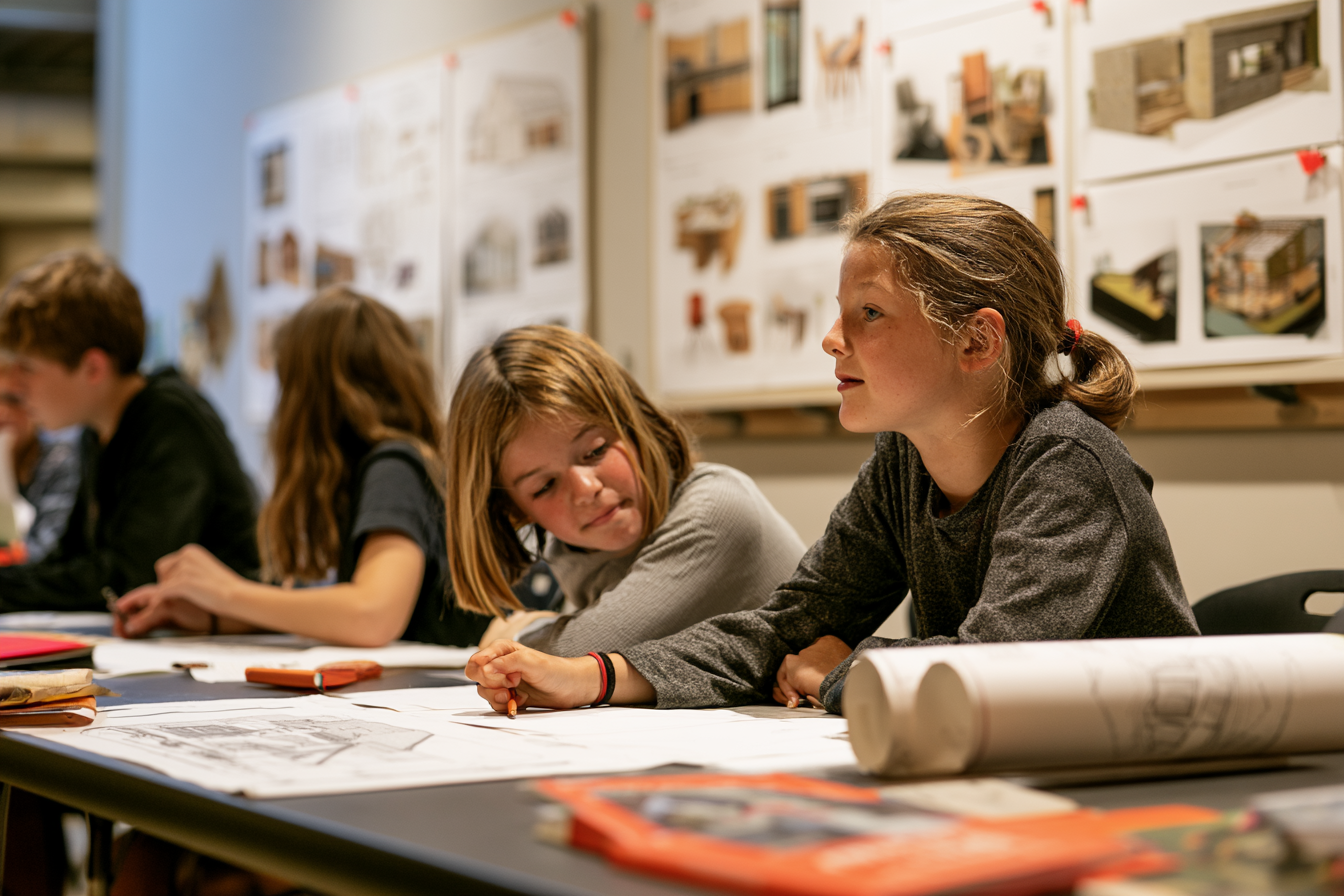
Focus: Engage students in a math and design challenge where they create a functional tiny house plan within specific space and budget constraints. Students draw scaled layouts, calculate area and volume, make choices about furniture, storage, and living space, and justify how their design meets the needs of an imagined user. The lesson emphasizes efficient use of space, mathematical accuracy, and design reasoning rather than simply creating a cute house.
Grade Level: 6-8
Subject Area: Math • Engineering Design • Financial Literacy • Speaking & Listening
Total Unit Duration: 1 core lesson with 2 optional extension lessons
I. Introduction
Students become architects and space-saving designers in a Build a Tiny House challenge where every square foot matters. In the core lesson, students are given a tiny house footprint, user profile, and design constraints. They must create a functional floor plan that includes essential living areas such as sleeping, cooking, storage, bathroom, workspace, and movement paths. As they design, students calculate the area of rooms or zones, estimate the volume of storage spaces or rectangular features, and make decisions about how to use limited space wisely.
The lesson is creative, but the math remains central. Students cannot simply draw a fun house; they must prove that the layout fits, the measurements make sense, and the design meets the user’s needs. By the end, students understand that real design problems require trade-offs, precision, and evidence-based decision-making.
Essential Questions
- How can area and volume help us design a functional living space?
- How do designers make smart choices when space is limited?
- What trade-offs happen when a design must meet both needs and constraints?
- How can a scale drawing or model help communicate a design clearly?
- How can math evidence help us justify a design decision?
II. Objectives and Standards
Learning Objectives — Students will be able to:
- Design a tiny house layout that fits within a given footprint or space limit.
- Calculate the area of rooms, zones, or furniture spaces using polygons and rectangles.
- Calculate the volume of right rectangular prisms such as storage boxes, cabinets, loft spaces, or built-in furniture.
- Apply design criteria and constraints related to space, budget, user needs, accessibility, comfort, and function.
- Revise or defend design choices using mathematical evidence.
- Present a final blueprint, model, or design pitch using accurate math vocabulary and clear reasoning.
Standards Alignment
- CCSS.MATH.CONTENT.6.G.A.1
- Find the area of right triangles, other triangles, special quadrilaterals, and polygons by composing into rectangles or decomposing into triangles and other shapes.
- CCSS.MATH.CONTENT.6.G.A.2
- Find the volume of a right rectangular prism with fractional edge lengths by packing it with unit cubes and show that volume is the same as multiplying edge lengths.
- CCSS.MATH.CONTENT.6.G.A.4
- Represent three-dimensional figures using nets made up of rectangles and triangles, and use the nets to find surface area.
- CCSS.MATH.CONTENT.7.G.B.6
- Solve real-world and mathematical problems involving area, volume, and surface area of two- and three-dimensional objects.
- NGSS MS-ETS1-1
- Define the criteria and constraints of a design problem with sufficient precision to ensure a successful solution.
- NGSS MS-ETS1-2
- Evaluate competing design solutions using a systematic process to determine how well they meet the criteria and constraints of the problem.
- CCSS.ELA-LITERACY.SL.6.4 / SL.7.4 / SL.8.4
- Present claims and findings in a focused, coherent manner with relevant evidence and appropriate details.
Success Criteria — Student Language
- I can design a tiny house that fits within a space limit.
- I can calculate the area of rooms, furniture zones, or floor spaces.
- I can calculate the volume of storage or built-in features.
- I can explain how my design meets the user’s needs and constraints.
- I can present my design using math evidence and clear reasoning.