Unit Plan 5 (Grade 8 Theater): Character Objectives and Obstacles
Teach Grade 8 theater students objectives, obstacles, tactics, relationships, conflict, and clear character choices in partner scenes.

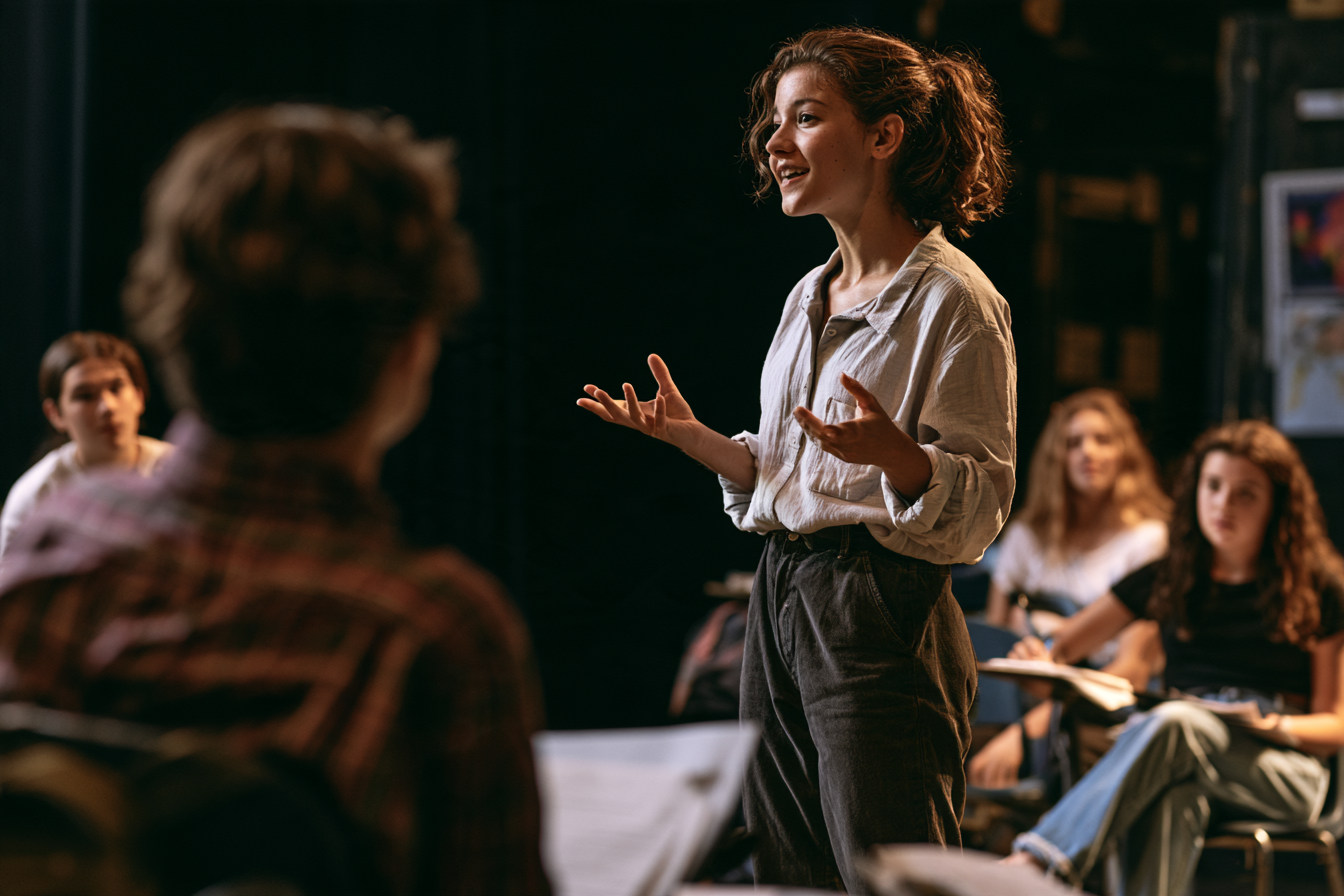
Focus: Teach students that characters usually want something and face obstacles that create conflict. Students examine simple scenes and improvised situations to identify each character’s objective, obstacle, relationship, and possible tactic. Students then perform brief partner scenes where the conflict becomes clearer because each character has a specific goal.
Grade Level: 8
Subject Area: Theater (Character Development • Scene Structure • Performance Choices)
Total Unit Duration: 5 sessions (one week), 50–60 minutes per session
I. Introduction
Students learn that strong scenes are driven by characters who want something. A character’s objective gives the scene direction, while an obstacle creates tension and conflict. When two characters want different things, the scene becomes more active, specific, and interesting for the audience.
In this unit, students analyze short scenes and improvised situations to identify objectives, obstacles, relationships, and tactics. They practice making performance choices that support what a character wants, such as changing voice, movement, pace, gesture, posture, or focus. By the end of the unit, students create and perform a short partner scene with clear characters, opposing objectives, obstacles, and a beginning-middle-end structure.
Essential Questions
- What does a character objective mean, and why does it matter in a scene?
- How do obstacles create conflict and make scenes more interesting?
- How can actors use tactics to show how a character tries to get what they want?
- How do relationships affect the way characters speak, move, and respond to each other?
- How can clear objectives and obstacles help actors create a stronger beginning, middle, and end?
II. Objectives and Standards
Learning Objectives — Students will be able to:
- Identify a character’s objective in a scene or improvised situation.
- Identify an obstacle that prevents a character from easily getting what they want.
- Explain how relationship, setting, and given circumstances affect character choices.
- Select and perform tactics that show how a character tries to overcome an obstacle.
- Create a short scene with clear characters, objectives, obstacles, relationships, conflict, and beginning-middle-end structure.
- Perform a character with clear choices in voice, movement, gesture, posture, focus, and behavior that support the character’s objective.
Standards Alignment — Grade 8 (NCAS-Aligned)
- T:S1.8b — Develop Characters, Conflict, and Scene Structure
- Create scenes that include clear characters, objectives, obstacles, relationships, setting, conflict, and beginning-middle-end structure.
- Example: A student writes or devises a scene where two characters want different things and the conflict builds through dialogue and action.
- T:S2.8c — Interpret and Perform a Character with Clear Choices
- Use script clues, given circumstances, character objectives, and actor choices to create a believable performance.
- Example: A student explains what their character wants in a scene and performs choices that support that objective.
Success Criteria — Student Language
- I can explain what my character wants in a scene.
- I can identify what is blocking my character from getting what they want.
- I can choose a tactic my character uses to try to overcome the obstacle.
- I can show my character’s objective through voice, movement, gesture, posture, or behavior.
- I can create or perform a short scene with clear conflict and a beginning, middle, and end.