Unit Plan 3 (Grade 8 Theater): Ensemble Focus and Trust
Build Grade 8 ensemble theater skills with lessons on focus, trust, rehearsal discipline, movement, timing, and purposeful physicality.

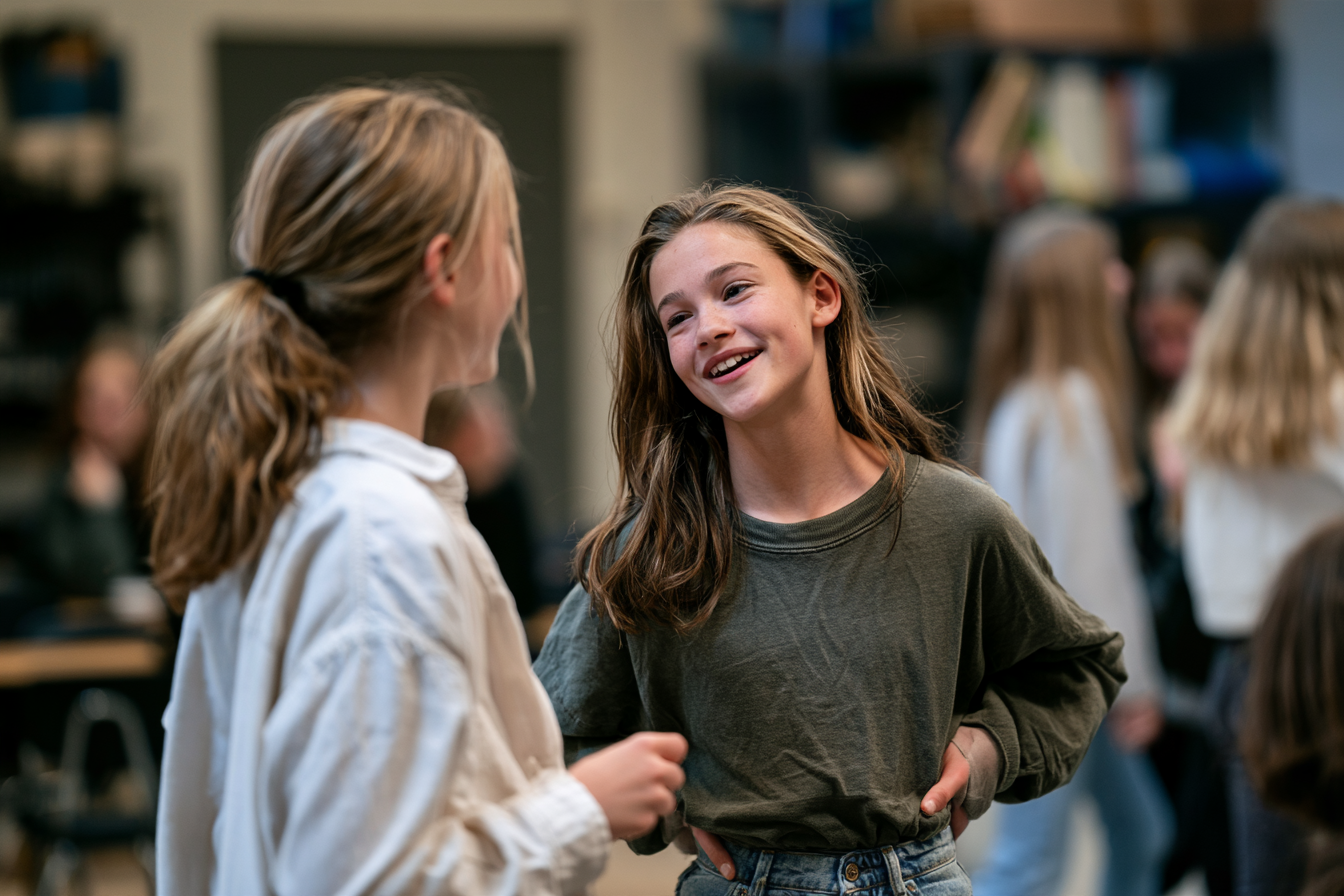
Focus: Develop strong ensemble habits through theater games and rehearsal tasks focused on concentration, listening, spatial awareness, timing, trust, and purposeful physicality. Students practice staying in the moment, responding to partners, supporting the group, and using rehearsal time productively rather than trying to dominate the activity.
Grade Level: 8
Subject Area: Theater (Ensemble • Rehearsal Discipline • Movement & Physicality)
Total Unit Duration: 5 sessions (one week), 50–60 minutes per session
I. Introduction
Students learn that strong theater ensembles are built through focus, trust, and shared responsibility. In this unit, students participate in structured theater games and rehearsal exercises that require them to listen closely, respond honestly, notice the space around them, and make choices that support the whole group. The focus is not on being the loudest, funniest, or most noticeable performer; it is on building an ensemble mindset where each performer helps others succeed.
Students connect each activity to real rehearsal discipline. They practice using rehearsal time to practice, revise, block, refine, and troubleshoot. They also begin using movement, gesture, posture, facial expression, and stage position with purpose, learning that the body communicates character, relationship, emotion, and status even before a line is spoken.
Essential Questions
- What does it mean to support an ensemble instead of trying to dominate a scene or activity?
- How do focus, listening, timing, and trust make group performance stronger?
- How can actors use movement, gesture, posture, and stage position to communicate meaning?
- What does productive rehearsal time look like in theater?
- How can performers help others succeed while still making strong individual choices?
II. Objectives and Standards
Learning Objectives — Students will be able to:
- Participate responsibly in ensemble games and rehearsal tasks by listening, staying focused, accepting roles, and supporting group success.
- Demonstrate concentration, spatial awareness, timing, and partner response during theater exercises.
- Use rehearsal time productively to practice, revise, block, refine, troubleshoot, and prepare a short ensemble performance task.
- Use posture, gesture, facial expression, movement, and stage position purposefully to communicate character, relationship, emotion, or status.
- Reflect on how ensemble habits connect to rehearsal discipline and performance quality.
- Create and present a short Ensemble Focus & Trust Scene or movement sequence that shows clear ensemble support, productive rehearsal habits, and purposeful physical choices.
Standards Alignment — Grade 8 (NCAS-Aligned)
- T:S3.8a — Participate Responsibly in an Ensemble
- Contribute to group work by listening, staying focused, respecting others’ ideas, accepting roles, and helping the ensemble succeed.
- Example: A student supports a group rehearsal by staying on task, listening to direction, and helping solve blocking or timing problems.
- T:S3.8b — Use Rehearsal Time Productively
- Use rehearsal time to practice, revise, memorize, block, refine, troubleshoot, and prepare for performance.
- Example: A group uses a rehearsal checklist to run lines, adjust movement, improve timing, and prepare transitions.
- T:S2.8b — Use Movement, Gesture, and Physicality Purposefully
- Use posture, facial expression, gesture, stage position, movement, and physical choices to show character, relationship, emotion, and status.
- Example: A student uses closed posture and limited eye contact to show that a character feels insecure or powerless in a scene.
Success Criteria — Student Language
- I can stay focused and support my ensemble during theater games, rehearsal, and performance tasks.
- I can listen and respond to partners instead of trying to control or dominate the activity.
- I can use rehearsal time to practice, revise, block, and improve a short performance.
- I can use my body, face, movement, and stage position to show emotion, relationship, or status.
- I can explain how focus, trust, and rehearsal discipline help a group perform better.