Unit Plan 36 (Grade K Library): Celebration of Stories, Curiosity, and Library Growth
Celebrate Kindergarten library growth with favorite stories, centers, routines, curiosity, respectful sharing, and end-of-year reflection.

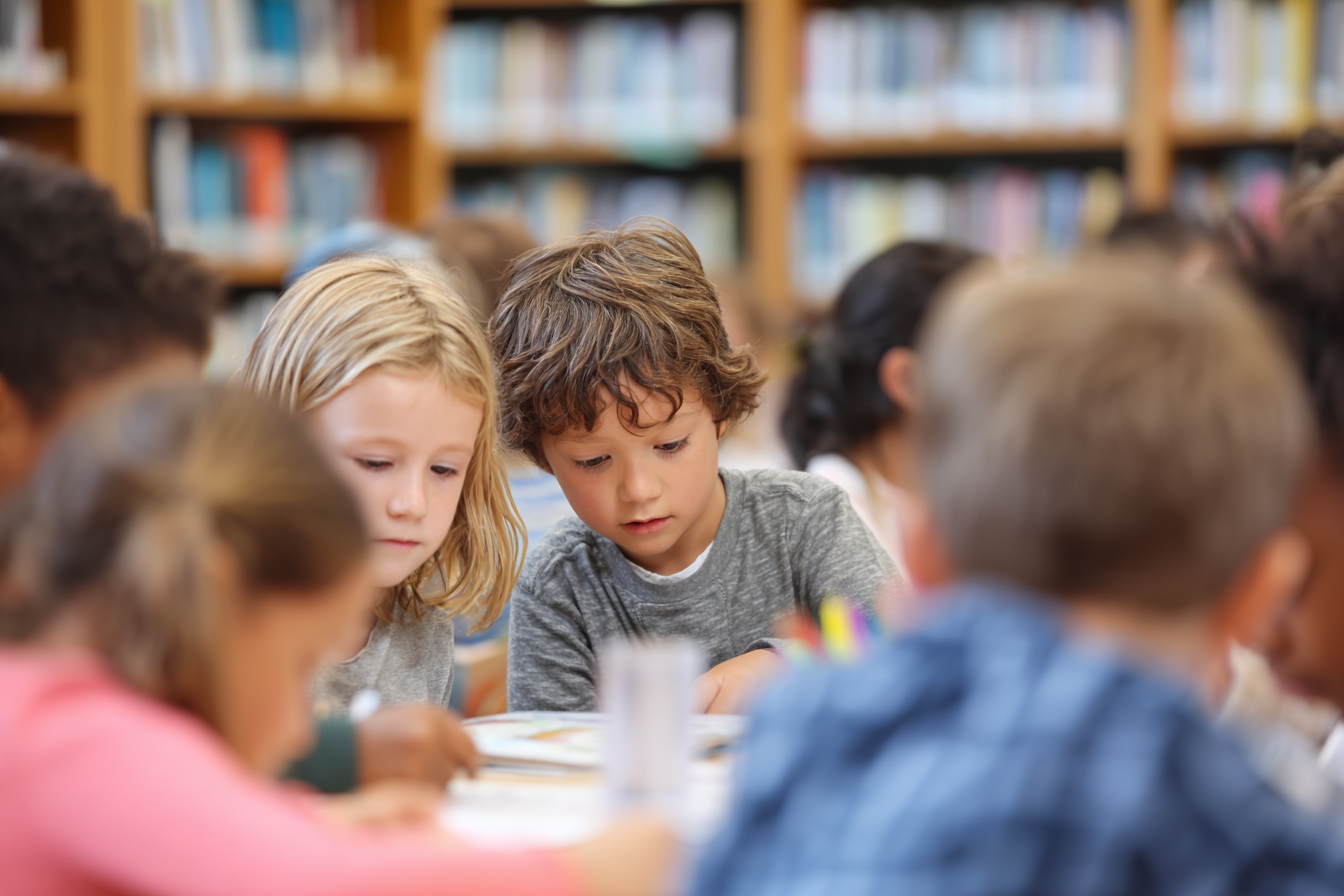
Focus: Celebrate Kindergarten students’ growth as library learners by revisiting favorite stories, activities, questions, routines, and response choices from the year. Students participate in a joyful mix of read-aloud, centers, sharing, and reflection while recognizing their growth in listening, choosing, wondering, exploring, creating, and participating responsibly.
Grade Level: K
Subject Area: Library (Celebration • Curiosity • Library Growth)
Total Unit Duration: 1–3 weeks, 50–60 minutes per session
I. Introduction
This final Kindergarten library unit celebrates a year of stories, curiosity, choices, routines, and growth. Students revisit favorite read-alouds, favorite topic baskets, favorite centers, and favorite ways of responding to library learning. The tone should feel joyful and affirming while still reinforcing the important skills students have practiced all year: listening respectfully, choosing books, asking questions, exploring topics, sharing ideas, creating responses, and participating responsibly.
The librarian can structure the unit as a celebration of what students now know how to do as library learners. Students might vote on a favorite read-aloud, rotate through beloved centers, draw or share one favorite library memory, ask a final wondering, or name one way they have grown. This final unit helps students leave Kindergarten seeing the library as a place where they belong, where their curiosity matters, and where stories and learning can continue to grow.
Essential Questions
- What stories, activities, and library routines have helped me grow this year?
- How can I ask questions and share wonderings about books, pictures, topics, and ideas?
- How can different readers enjoy different books, topics, and viewpoints?
- How can I celebrate library learning while participating respectfully?
II. Objectives and Standards
Learning Objectives — Students will be able to:
- Ask questions and share wonderings about books, pictures, topics, and ideas introduced in library.
- Recognize that people may enjoy different books, topics, and viewpoints and that all belong in the library.
- Use stories, play, art, writing, talk, or movement to explore and respond to ideas from library lessons.
- Participate respectfully in reading, listening, viewing, discussing, and sharing in the library.
- Share one favorite story, activity, topic, routine, or library memory from the year.
- (Optional Sessions) Strengthen reflection and celebration through favorite read-alouds, center rotations, creative responses, and sharing about library growth.
Standards Alignment — Kindergarten (AASL-based Custom)
- L:S1.Ka — Ask questions and share wonderings about books, pictures, topics, and ideas introduced in library.
- Example: A student asks, “How do bees make honey?” after hearing a nonfiction read-aloud.
- L:S2.Kc — Recognize that people may enjoy different books, topics, and viewpoints, and that all belong in the library.
- Example: A student understands that one classmate may choose a dinosaur book while another chooses a fairy tale.
- L:S5.Ka — Use stories, play, art, writing, talk, or movement to explore and respond to ideas from library lessons.
- Example: A student draws a favorite story scene and explains what is happening.
- L:S6.Kc — Participate respectfully in reading, listening, viewing, discussing, and sharing in the library.
- Example: A student listens during a read-aloud and responds appropriately during discussion time.
Success Criteria — Student Language
- I can share a question or wondering.
- I can celebrate my favorite books, topics, and activities.
- I can understand that classmates may have different favorites.
- I can respond to stories and ideas through talking, drawing, play, writing, or movement.
- I can participate respectfully during our library celebration.
- I can name one way I have grown as a library learner.
III. Materials and Resources
Tasks & Tools (teacher acquires/curates)
- Celebration materials:
- Favorite read-alouds, picture books, informational books, wordless books, folktales, poetry, or topic books from the year.
- Familiar topic baskets such as animals, weather, transportation, community helpers, families, plants, seasons, stories, fairy tales, or funny books.
- Book-cover cards, voting cards, topic cards, or picture-choice cards for selecting favorites.
- Center and response materials:
- Familiar centers such as browsing baskets, listening center, drawing response station, puppet/retelling center, sorting station, topic basket, picture-talk station, or building/making station.
- Puppets, felt pieces, sequencing cards, sorting cards, blocks, crayons, paper, markers, headphones, or safe digital story tools.
- Optional “library memory” display area or class chart.
- Reflection supports:
- Anchor chart with stems such as:
- “My favorite library story was…”
- “I wondered about…”
- “I liked learning about…”
- “Now I can…”
- “I grew as a library learner by…”
- Visual cards for story, curiosity, favorite, wonder, belong, respond, listen, share, and growth.
- Anchor chart with stems such as:
- Student materials:
- Drawing page such as “My Favorite Library Memory,” “Now I Can in Library,” or “A Story I Loved.”
- Crayons, pencils, markers, sticky notes, and optional reflection cards or mini-book pages.
Preparation
- Select several favorite books, centers, topic baskets, and activities from the year.
- Prepare a simple voting or choice routine for selecting a final read-aloud or favorite center.
- Create anchor charts:
- “Celebration of Stories, Curiosity, and Library Growth”
- “Different Readers, Different Favorites”
- “We Can Wonder, Create, Share, and Listen”
- “Look How We Have Grown in Library”
- Decide whether students will participate in a whole-class celebration, center rotations, reflection sharing, or a combination of all three.
Common Misconceptions to Surface
- “Celebration means routines do not matter.” → Celebrations work best when students still listen, share, and participate respectfully.
- “Everyone should choose the same favorite.” → Different readers may enjoy different books, topics, and viewpoints.
- “Wondering is only for the beginning of learning.” → Curious library learners can keep asking questions all year long.
- “Only finished projects show growth.” → Growth can be shown through listening, choosing, asking, sharing, creating, and helping.
Key Terms (highlight in lessons) celebration, story, curiosity, wonder, favorite, belong, respond, respectful, growth, library learner
IV. Lesson Procedure
(Each session follows: Welcome/Focus → Mini-Lesson/Shared Reading → Work Time → Discussion/Sharing → Reflect → Check-Out. Timing for a 50–60 minute library class.)
Session 1 — Celebrating Favorite Stories and Wonderings (Core Session — Addresses All Standards: L:S1.Ka, L:S2.Kc, L:S5.Ka, L:S6.Kc)
- Welcome/Focus (5–8 min)
- Greet students and guide them to the story area using familiar library routines.
- Tell students that today they will celebrate favorite stories, questions, and library learning from the year.
- Ask: “What is one story, topic, or activity you remember from library?”
- Explain that the class will celebrate many different favorites because all readers and learners belong in the library.
- Mini-Lesson/Shared Reading (10–15 min)
- Show several favorite read-alouds or book covers from the year.
- Invite students to vote on or help choose one final favorite read-aloud.
- Before reading, remind students that they can listen for favorite parts, new wonderings, or memories from earlier in the year.
- Read or revisit the selected book, pausing briefly for simple wonderings, observations, or connections.
- Reinforce that stories can help students enjoy, imagine, wonder, learn, and belong.
- Work Time (15–20 min)
- Students create or share a celebration response connected to the year’s library learning.
- Options may include:
- drawing a favorite library story
- drawing one thing they wondered about
- choosing a favorite topic card or book basket
- using puppets or props to show a favorite story moment
- creating a “Now I can…” library learner response
- Librarian supports students in connecting their response to a real story, topic, activity, or memory from the year.
- Discussion/Sharing (8–10 min)
- Invite students to share one favorite, wondering, or library memory.
- Ask: “Did everyone choose the same favorite?”
- Reinforce that different readers and learners may love different books, topics, and activities, and that all belong in the library.
- Reflect (3–5 min)
- Students respond through speaking, drawing, pointing, or sentence stems such as:
- “My favorite library story was ___.”
- “I wondered about ___.”
- “Now I can ___ in library.”
- Students respond through speaking, drawing, pointing, or sentence stems such as:
- Check-Out (3–5 min)
- Give brief, standards-based feedback such as:
- “You shared a wondering or question about a book, picture, topic, or idea.”
- “You respected that classmates may have different favorites.”
- “You used stories, art, talk, play, or movement to celebrate your library growth.”
- “You participated respectfully during reading, listening, discussing, and sharing.”
- Give brief, standards-based feedback such as:
Optional Session 2 — Favorite Library Centers Celebration (Extension — Deepen L:S1.Ka, L:S2.Kc, L:S5.Ka, L:S6.Kc)
- Welcome/Focus (5–7 min)
- Review the chart “We Can Wonder, Create, Share, and Listen.”
- Ask: “Which library centers helped us read, listen, retell, create, or learn this year?”
- Preview the celebration centers and remind students that joyful learning still includes safe and respectful participation.
- Mini-Lesson/Shared Reading (8–12 min)
- Model how students can use a favorite center as a celebration of learning.
- Demonstrate examples such as:
- using puppets to retell a favorite story
- drawing a favorite part from a book
- exploring a topic basket and asking a wondering
- listening to an audio story respectfully
- sorting books or cards by topic or feature
- Reinforce that centers help students show curiosity, creativity, and growth.
- Work Time (15–20 min)
- Students rotate through or choose from favorite library centers.
- Options may include:
- favorite book browsing
- listening center
- puppet/retelling center
- topic basket exploration
- drawing response station
- picture-talk or sorting station
- Librarian supports students in using centers safely, asking or sharing wonderings, and respecting different choices.
- Discussion/Sharing (8–10 min)
- Students share one center they enjoyed and one thing they did there.
- Ask: “How did that center help you learn or enjoy library?”
- Reinforce that students may prefer different centers and that those differences belong in the library community.
- Reflect (3–5 min)
- Students respond:
- “I chose ___ center.”
- “It helped me ___.”
- “One thing I wondered was ___.”
- Students respond:
- Check-Out (3–5 min)
- Give brief feedback tied to the standards, such as:
- “You used a favorite library center to explore, respond, or create.”
- “You participated respectfully while classmates chose different activities.”
- “You shared a question, wondering, or memory from your library learning.”
- “You listened and shared respectfully during the celebration.”
- Give brief feedback tied to the standards, such as:
Optional Session 3 — Sharing Our Library Growth (Extension — Solidify L:S1.Ka, L:S2.Kc, L:S5.Ka, L:S6.Kc)
- Welcome/Focus (5–7 min)
- Ask: “How have we grown as library learners this year?”
- Review that students have practiced listening, choosing, wondering, exploring, retelling, sorting, creating, sharing, and caring for materials.
- Mini-Lesson/Shared Reading (8–12 min)
- Revisit a favorite book, image, topic basket, or class chart from earlier in the year.
- Model a final reflection:
- “At the beginning of the year, we learned how to…”
- “Now we can…”
- “One thing I still wonder is…”
- “One kind of book I like is…”
- Reinforce that library growth looks different for different students, and every learner belongs.
- Work Time (15–20 min)
- Students create or prepare a final library growth response.
- Options may include:
- drawing a favorite library memory
- completing a “Now I can…” page
- sharing one favorite book, topic, tool, or routine
- creating a picture response to a favorite story
- asking a final wondering for a class curiosity chart
- using movement, puppets, or art to show a favorite library experience
- Librarian supports students in naming a real area of growth or a meaningful library memory.
- Discussion/Sharing (8–10 min)
- Students share their final library growth response with a partner, small group, or class.
- Audience members practice respectful listening and kind responses.
- Ask: “What did we learn about our class as readers and library learners?”
- Reinforce that the library is a place for many stories, questions, topics, viewpoints, and learners.
- Reflect (3–5 min)
- Final reflection prompt:
- “I grew in library by ___.”
- “A story or topic I loved was ___.”
- “I still wonder about ___.”
- Final reflection prompt:
- Check-Out (3–5 min)
- Give brief, standards-based feedback such as:
- “You celebrated a story, topic, question, or library routine that mattered to you.”
- “You showed that different readers and learners belong in the library.”
- “You used art, talk, play, movement, or writing to show your library growth.”
- “You participated respectfully during our final library sharing.”
- Give brief, standards-based feedback such as:
V. Differentiation and Accommodations
Advanced Learners
- Invite students to explain why a favorite story, topic, or center helped them grow.
- Encourage students to share both a favorite and a new wondering they still have.
- Ask students to compare what they liked at the beginning of the year with what they enjoy now.
Targeted Support
- Offer concrete visual choices such as favorite book, favorite topic, favorite center, or favorite routine.
- Provide sentence stems such as:
- “My favorite was ___.”
- “I wonder ___.”
- “Now I can ___.”
- “I liked learning about ___.”
- Allow students to point to a book, center card, topic card, or drawing before sharing orally.
Multilingual Learners
- Provide picture-supported vocabulary for favorite, story, wonder, book, topic, create, share, listen, grow.
- Allow students to point, gesture, draw, choose cards, or show a favorite object before speaking.
- Use repeated modeling and partner support.
- Accept short oral responses supported by visuals, drawings, props, or movement.
IEP/504 & Accessibility
- Break celebration tasks into small steps: choose, create, share, listen.
- Use visual choice boards, familiar books, predictable routines, and alternate response options.
- Offer oral, drawing, pointing, movement, puppet, prop, partner-supported, or teacher-dictated responses.
- Provide extra wait time, sensory supports, small-group sharing options, and adult support as needed.
VI. Assessment and Evaluation
Formative Checks (each session)
- Session 1 — Students revisit favorite stories and share wonderings, favorites, or library memories while participating respectfully.
- Optional Session 2 — Students rotate through favorite centers and use stories, play, art, writing, talk, or movement to explore and respond.
- Optional Session 3 — Students create or share a final library growth response and listen respectfully to classmates’ different favorites and reflections.
Summative — Celebration of Stories, Curiosity, and Library Growth Reflection & Participation (0–2 per criterion, total 10)
- Asking Questions and Sharing Wonderings (L:S1.Ka)
- 2: Student asks questions or shares wonderings about books, pictures, topics, and ideas introduced in library.
- 1: Student shares a simple question or wondering with support.
- 0: Student rarely asks questions or shares wonderings.
- Recognizing That Different Books, Topics, and Viewpoints Belong (L:S2.Kc)
- 2: Student shows understanding that people may enjoy different books, topics, and viewpoints and that all belong in the library.
- 1: Student shows some awareness that different choices or ideas belong with support.
- 0: Student has difficulty recognizing that different readers, books, topics, or viewpoints belong.
- Using Stories, Play, Art, Writing, Talk, or Movement to Respond (L:S5.Ka)
- 2: Student uses stories, play, art, writing, talk, or movement to explore and respond to ideas from the library lesson.
- 1: Student responds with support, but the response may be brief or only partly connected.
- 0: Student rarely uses a response mode to show thinking.
- Respectful Participation in Reading, Listening, Viewing, Discussing, and Sharing (L:S6.Kc)
- 2: Student participates respectfully in reading, listening, viewing, discussing, and sharing in the library.
- 1: Student participates respectfully some of the time but needs reminders.
- 0: Student rarely participates respectfully during library activities.
- Reflection on Library Growth
- 2: Student shares or shows one favorite story, activity, topic, routine, wondering, or growth statement from the year.
- 1: Student gives a basic reflection with support.
- 0: Student provides little or no meaningful reflection on library learning or growth.
Feedback Protocol (TAG)
- Tell one strength (e.g., “You shared a favorite library story and listened respectfully to classmates’ different favorites.”).
- Ask one question (e.g., “What is one thing you still wonder about after this year in library?”).
- Give one suggestion (e.g., “Next time, try adding why that story, center, or topic was special to you.”).
VII. Reflection and Extension
Reflection Prompts
- What story, topic, center, or routine did I love in library this year?
- What question or wondering do I still have?
- How have I grown as a library learner?
Extensions
- Library Memory Display: Create a class display of favorite library memories, drawings, or “Now I can…” statements.
- Final Favorites Basket: Leave a basket of class-favorite books available for one final browsing or checkout experience.
- Family Connection: Encourage students to tell someone at home one favorite library memory and one way they grew as a reader, listener, or learner.
Standards Trace — When Each Standard Is Addressed
- L:S1.Ka — Session 1 (sharing wonderings during favorite read-aloud reflection), Optional Session 2 (asking or sharing wonderings during favorite center exploration), Optional Session 3 (adding final wonderings to a class curiosity chart or growth response).
- L:S2.Kc — Session 1 (recognizing that students may have different favorite stories and topics), Optional Session 2 (respecting different center and book choices), Optional Session 3 (sharing varied library identities and reinforcing that all learners belong).
- L:S5.Ka — Session 1 (using drawing, talk, play, or movement to respond to a favorite story or memory), Optional Session 2 (using centers such as retelling, drawing, listening, sorting, or topic exploration to respond), Optional Session 3 (creating or sharing a final library growth response).
- L:S6.Kc — Session 1 (participating respectfully during reading, listening, discussing, and sharing), Optional Session 2 (respectful participation during center celebration and sharing), Optional Session 3 (respectful listening, viewing, discussing, and sharing during final library growth reflection).