Unit Plan 36 (Grade 1 Counselor): Grade 1 Counselor Celebration
Celebrate Grade 1 counseling growth with feelings, coping tools, friendship skills, problem-solving, boundaries, safe choices, and reflection.

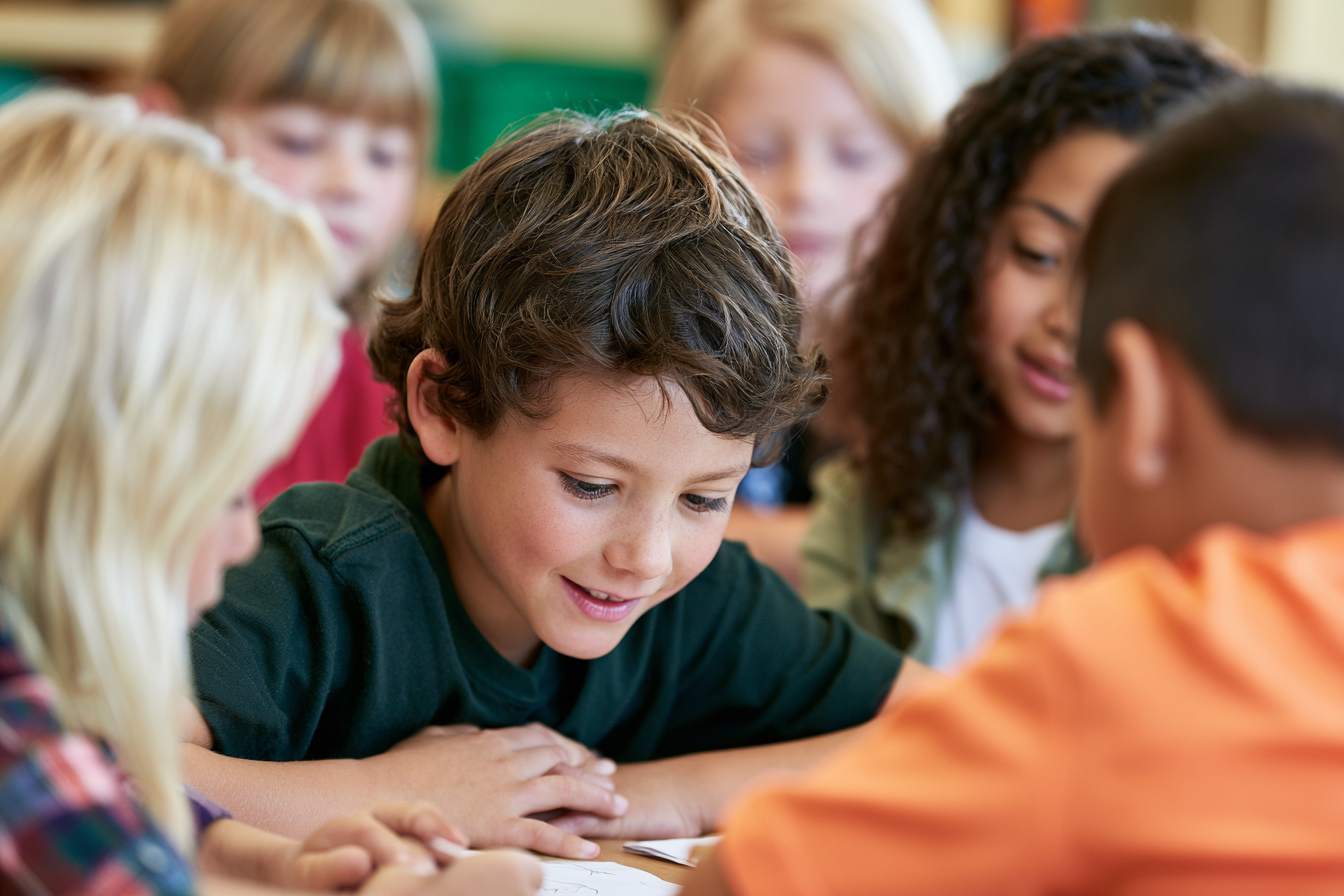
Focus: Celebrate students’ growth in Grade 1 counselor lessons. The counselor reviews feelings, coping tools, friendship skills, problem-solving steps, trusted adults, boundaries, and responsible choices through a game, movement activity, class circle, or reflection sheet. The lesson feels joyful while reinforcing that students now have tools to help them handle feelings, solve problems, be kind friends, and succeed at school.
Grade Level: 1
Subject Area: School Counseling (Celebration • Reflection • Counseling Skills Review)
Total Unit Duration: 1–2 weeks, 30 minutes per session
I. Introduction
This final Grade 1 counseling lesson celebrates the skills students have learned and practiced throughout the year. Students review how to name feelings, notice body clues, use coping tools, include others, solve problems with words, respect boundaries, ask trusted adults for help, keep trying, and make safe, kind, and responsible choices.
The counselor uses a joyful review format such as a class circle, movement game, counseling skills board game, toolbox celebration, reflection sheet, or team challenge. The goal is for students to leave the year feeling proud of their growth and confident that they have practical tools they can use in second grade and beyond.
Essential Questions
- What counseling skills have students learned this year?
- What feelings and coping tools can students remember?
- How can students be kind friends and solve problems with words?
- What safe and responsible choices help school feel welcoming?
- How can students keep using these tools as they grow?
II. Objectives and Standards
Learning Objectives — Students will be able to:
- Reflect on one or more counseling skills they learned during Grade 1.
- Name coping tools they can use when feelings get big.
- Identify kind words and actions that help classmates feel included and respected.
- Review simple problem-solving steps such as stop, calm down, name the problem, think of choices, choose a safe solution, and try it.
- Explain that keeping trying and using helpful self-talk can support learning and growth.
- Choose safe and responsible actions in school spaces and group settings.
- (Optional Session) Apply year-end review skills through a celebration game, movement stations, class circle, counseling toolbox sort, or reflection activity.
Standards Alignment — Grade 1 (ASCA-based Custom)
- C:S1.1c — Show Belonging in the Classroom and School
- Recognize that they are an important member of the class and can help create a kind, safe, welcoming community.
- Example: A student names one way they can help classmates feel included during group work or play.
- C:S2.1b — Use Calming and Coping Strategies
- Practice calming tools such as breathing, counting, positive self-talk, asking for help, taking a break, or using a quiet voice.
- Example: A student practices taking three slow breaths before trying again after a mistake.
- C:S3.1a — Use Kind Words and Actions
- Demonstrate kindness through helpful words, friendly invitations, encouragement, and respectful behavior.
- Example: A student says, “You can play with us,” when noticing a classmate standing alone.
- C:S4.1b — Use Simple Problem-Solving Steps
- Use basic steps such as stop, calm down, name the problem, think of choices, choose a safe solution, and try it.
- Example: A student practices saying, “Let’s take turns,” after naming the problem with a partner.
- C:S5.1b — Keep Trying and Use a Growth Mindset
- Understand that learning takes practice and use helpful self-talk when work feels hard.
- Example: A student says, “I cannot do it yet, but I can try again.”
- C:S6.1c — Make Safe and Responsible Choices
- Choose safe, respectful actions in classroom, hallway, playground, cafeteria, and group settings.
- Example: A student chooses walking feet in the hallway, keeps hands to self, and tells an adult about an unsafe situation.
Success Criteria — Student Language
- I can name a counseling skill I learned.
- I can name a coping tool I can use.
- I can use kind words and actions.
- I can remember problem-solving steps.
- I can use growth mindset words when something is hard.
- I can make safe and responsible choices at school.
- I can feel proud of my growth.
III. Materials and Resources
Tasks & Tools (counselor prepares/curates)
- Counseling skill review cards, such as:
- Name the feeling.
- Notice the body clue.
- Use a coping tool.
- Ask for help.
- Use kind words.
- Include others.
- Share and take turns.
- Listen respectfully.
- Solve problems with words.
- Respect personal space.
- Keep trying.
- Make safe choices.
- Feelings cards, such as:
- Happy
- Sad
- Mad
- Worried
- Scared
- Excited
- Embarrassed
- Proud
- Calm
- Frustrated
- Lonely
- Confused
- Coping tool cards, such as:
- Take three slow breaths.
- Count slowly to ten.
- Use positive self-talk.
- Ask for help.
- Take a short break.
- Use a quiet voice.
- Ask for space.
- Relax hands and shoulders.
- Try one small step.
- Draw or write.
- Stay near a trusted adult.
- Walk away safely with permission.
- Kindness and friendship cards, such as:
- “You can play with us.”
- “Do you want to join?”
- “Good try.”
- “Can I help?”
- “Are you okay?”
- “Thank you for sharing.”
- “Let’s take turns.”
- “You can go first.”
- Invite someone.
- Share materials.
- Encourage a classmate.
- Help clean up.
- Problem-solving step cards, such as:
- Stop.
- Calm down.
- Name the problem.
- Think of choices.
- Choose a safe solution.
- Try it.
- Ask an adult if needed.
- Growth mindset cards, such as:
- “I am still learning.”
- “I can try again.”
- “I can try a new way.”
- “I can ask for help.”
- “I cannot do it yet.”
- “Mistakes help me learn.”
- “Practice helps me grow.”
- “I can take one small step.”
- Safe and responsible choice cards, such as:
- Walk in the hallway.
- Keep hands and feet safe.
- Ask before touching someone’s things.
- Stop when someone says “stop.”
- Tell an adult about something unsafe.
- Follow directions.
- Use materials safely.
- Clean up supplies.
- Wait for a turn.
- Use calm words.
- Celebration activity cards, such as:
- Act out a coping tool.
- Name a feeling.
- Choose a kind phrase.
- Match a problem to a safe solution.
- Share one way to include others.
- Say a growth mindset phrase.
- Name a trusted adult.
- Show a safe school choice.
- Name one thing you are proud of.
- Name one skill to keep practicing.
- Scenario cards, such as:
- A student feels mad after losing a game.
- A student feels worried before trying something new.
- A student sees someone standing alone at recess.
- Two students want the same marker.
- A student forgets what to do next.
- A student says, “Please stop,” and needs space.
- A student makes a mistake and feels embarrassed.
- A student sees something unsafe.
- A student wants to give up when work feels hard.
- A student wants to be a kind classroom leader.
- Sorting signs or cards labeled:
- “Feeling”
- “Coping Tool”
- “Kind Words”
- “Problem-Solving Step”
- “Growth Mindset”
- “Safe Choice”
- “Trusted Adult”
- “Belonging”
- “Skill I Am Proud Of”
- “Skill I Learned → How It Helps → When I Can Use It → Skill I Will Keep Practicing” organizer.
- “Grade 1 Counselor Celebration” reflection page.
- Reflection slips or exit tickets.
- Optional board game, dice, counters, movement cards, class circle talking piece, counselor toolbox poster, celebration certificates, puppet, class mural, or review spinner.
Preparation
- Choose a joyful review format that fits the class, such as a board game, movement stations, class circle, team card sort, or counseling skills celebration.
- Select review cards that represent the biggest Grade 1 themes: feelings, coping, friendship, problem-solving, boundaries, trusted adults, responsible choices, and growth mindset.
- Create anchor charts:
- “Counseling Tools We Learned”
- “Feelings, Tools, Friends, Problems, Safety, Growth”
- “I Have Tools for Big Feelings and School Problems”
- “I Am Ready to Keep Growing”
- Prepare a counselor model, such as: “One skill I learned is using calm breathing. It helps me when I feel mad or worried. I can use it at school, at home, or when I need to try again.”
- Remind students that the lesson is a celebration of growth, not a test. Students can answer by speaking, drawing, moving, pointing, sorting, or choosing picture cards.
Common Misconceptions to Surface
- “Celebration means we are done using these skills.” → Students can keep using counseling tools in second grade and beyond.
- “I have to remember every skill perfectly.” → Students can remember a few helpful tools and keep practicing.
- “Only big problems need counseling skills.” → Feelings, friendship skills, safe choices, and responsible routines can be practiced every day.
- “Asking for help means I did not learn enough.” → Asking for help is one of the important skills students learned.
- “Growth means I never make mistakes anymore.” → Growth means students know more tools to use when mistakes or problems happen.
Key Terms (highlight in lessons) celebration, growth, counseling skill, feeling, coping tool, kindness, friendship, problem-solving, trusted adult, boundary, safe choice, responsible choice, growth mindset, belonging, practice, proud, keep trying, ready
IV. Lesson Procedure
(Each session follows: Welcome & Connection → Counselor Activity → Discussion & Practice → Reflection. Timing for a 30-minute counseling lesson.)
Session 1 — Grade 1 Counselor Celebration (Core Session — Addresses All Standards: C:S1.1c, C:S2.1b, C:S3.1a, C:S4.1b, C:S5.1b, C:S6.1c)
- Welcome & Connection (5–6 min)
- Counselor asks:
- “What counseling tools have we learned this year?”
- Record student ideas such as feelings, breathing, counting, asking for help, kind words, sharing, taking turns, problem-solving steps, boundaries, safe choices, and trying again.
- Explain that the lesson is a celebration of growth and a review of tools students can keep using.
- Introduce the celebration routine: remember the skill, practice the tool, explain how it helps, celebrate growth.
- Counselor asks:
- Counselor Activity (12–15 min)
- Introduce the “Skill I Learned → How It Helps → When I Can Use It → Skill I Will Keep Practicing” organizer.
- Model one feelings and coping example:
- Skill I learned: name a feeling and use a coping tool.
- How it helps: it helps me calm my body and think.
- When I can use it: when I feel mad, worried, scared, or frustrated.
- Skill I will keep practicing: taking three slow breaths.
- Model one friendship example:
- Skill I learned: use kind words and include others.
- How it helps: it helps classmates feel welcome and respected.
- When I can use it: at recess, during group work, or when someone is standing alone.
- Skill I will keep practicing: inviting someone to join.
- Model one problem-solving example:
- Skill I learned: stop, calm down, name the problem, think of choices, choose a safe solution, and try it.
- How it helps: it helps solve friend problems without hurting others.
- When I can use it: when two students want the same material or disagree during a game.
- Skill I will keep practicing: using words before asking for help.
- Model one growth mindset example:
- Skill I learned: say, “I cannot do it yet, but I can try again.”
- How it helps: it helps me keep learning when something is hard.
- When I can use it: during reading, writing, math, cleanup, or friendship practice.
- Skill I will keep practicing: trying one small step before giving up.
- Model one safe choice example:
- Skill I learned: make safe and responsible choices.
- How it helps: it keeps bodies safe and helps the classroom run smoothly.
- When I can use it: in the hallway, classroom, cafeteria, playground, bus line, or group work.
- Skill I will keep practicing: keeping hands and feet safe.
- Students participate in a celebration game, movement activity, class circle, toolbox sort, or reflection sheet. For each card or prompt, they identify:
- What skill is being reviewed?
- How does this skill help students?
- When could students use this skill?
- What words, tools, or choices could students practice?
- What is one skill they are proud of?
- Students sort cards into Feeling, Coping Tool, Kind Words, Problem-Solving Step, Growth Mindset, Safe Choice, Trusted Adult, Belonging, or Skill I Am Proud Of.
- Discussion & Practice (6–7 min)
- Whole-group discussion:
- “Which coping tool helped students this year?”
- “Which friendship skill helped students be kind friends?”
- “Which problem-solving step is important to remember?”
- “Which safe choices help school feel calm and welcoming?”
- “What skill are students proud of learning?”
- Practice celebration review phrases:
- “I learned how to ___.”
- “This helps me because ___.”
- “This helps my class because ___.”
- “When I feel ___, I can ___.”
- “When I have a problem, I can ___.”
- “I can be kind by ___.”
- “I can keep trying by saying ___.”
- “I am proud that I can ___.”
- Counselor reinforces that students have a toolbox of skills for feelings, friendships, problems, safety, and school success.
- Whole-group discussion:
- Reflection (2–3 min)
- Exit reflection prompt:
- “One counseling skill I am proud of is ___.”
- “One tool I can keep using is ___.”
- Exit reflection prompt:
Optional Session 2 — Counseling Skills Celebration Circle and Toolbox Review (Extension — Reinforces All Standards)
- Welcome & Connection (4–5 min)
- Quick review: “What is in our counseling toolbox?”
- Students review feelings, coping tools, kind words, problem-solving steps, trusted adults, boundaries, responsible choices, and growth mindset words.
- Counselor reminds students that these tools can help in second grade, at home, at recess, during learning, and with friends.
- Counselor Activity (15–17 min)
- Students complete a Counseling Skills Celebration Circle and Toolbox Review using review cards, reflection prompts, and movement or class circle activities.
- Possible activity formats:
- Toolbox Sort: Students place skill cards into a counseling toolbox poster.
- Celebration Circle: Students share one skill they are proud of and one skill they will keep practicing.
- Movement Review: Students move to corners labeled feelings, friendship, problem-solving, safety, and growth.
- Counseling Skills Game: Students answer scenario prompts and choose a tool or safe response.
- Scenarios may include:
- A student feels mad and needs a coping tool.
- A student sees someone left out and wants to be kind.
- A student has a friend problem and needs problem-solving steps.
- A student feels stuck and needs growth mindset words.
- A student needs personal space or needs to respect “stop.”
- A student sees something unsafe and needs adult help.
- A student wants to help the classroom community.
- A student is proud of how much they have grown.
- For each scenario, students complete:
- The skill needed is ___.
- The words or tool I can use are ___.
- This helps because ___.
- A trusted adult can help if ___.
- I can keep practicing by ___.
- Students may complete a Grade 1 Counselor Celebration Card with prompts such as:
- I learned ___.
- I am proud that I can ___.
- A tool I can use is ___.
- A kind choice I can make is ___.
- In second grade, I want to keep practicing ___.
- Discussion & Practice (6–7 min)
- Counselor leads a debrief:
- “How have students grown in feelings skills?”
- “How have students grown in friendship skills?”
- “How have students grown in safe and responsible choices?”
- “How have students grown in problem-solving?”
- “What tools should students keep using next year?”
- Students practice changing tricky moments into counseling tool choices:
- “I feel mad” → “I can breathe, count, use calm words, or ask for help.”
- “Someone is left out” → “I can invite them or make room.”
- “We both want the same marker” → “We can take turns or make a plan.”
- “This is too hard” → “I can say, ‘I am still learning.’”
- “Someone says stop” → “I stop and give space.”
- “Something feels unsafe” → “I tell a trusted adult.”
- Counselor reinforces that students are ready to keep using their tools as they continue growing.
- Counselor leads a debrief:
- Reflection (2–3 min)
- Final reflection prompt:
- “I am proud that I learned ___.”
- “Next year, I will keep practicing ___.”
- Final reflection prompt:
V. Differentiation and Accommodations
Advanced Learners
- Invite students to explain how one counseling skill can help in more than one setting, such as classroom, recess, home, or group work.
- Encourage students to create their own review scenario and identify the feeling, tool, kind choice, safe solution, and adult-help point.
- Ask students to connect one skill they learned to one goal they want to keep practicing next year.
Targeted Support
- Provide visual cards for feelings, coping tools, kindness, problem-solving, growth mindset, and safe choices.
- Use fewer categories at first, such as feelings, tools, friends, problems, and safety.
- Provide sentence frames such as:
- “I learned ___.”
- “I can use ___.”
- “This helps ___.”
- “I am proud of ___.”
- “I will keep practicing ___.”
- Allow students to choose from prepared cards instead of generating responses independently.
Multilingual Learners
- Provide visual and bilingual supports for key terms such as feeling, help, friend, kind, safe, try, goal, and proud.
- Model celebration phrases with gestures, visuals, puppets, and repeated practice.
- Allow students to share a skill or reflection in a home language and connect it to English words or visuals.
- Provide simple speaking stems:
- “I learned ___.”
- “I feel proud.”
- “I can help.”
- “I can try.”
IEP/504 & Accessibility
- Provide a simplified celebration organizer with icons, checkboxes, and short sentence stems.
- Allow students to respond by pointing, matching, circling, drawing, dictating, moving, or speaking.
- Provide extra processing time during game turns, reflection, and sharing.
- Offer private sharing with the counselor, teacher, or trusted partner if whole-group sharing feels uncomfortable.
- Use concrete visuals, puppets, movement options, board game pieces, or class charts to support active engagement.
VI. Assessment and Evaluation
Formative Checks (each session)
- Session 1 — Celebration game responses, toolbox sorting, scenario discussion, and reflection prompts show students can remember and apply major counseling skills from the year.
- Optional Session 2 — Celebration circle responses, movement review, counseling skills game, and final reflection cards show students can identify tools they are proud of and skills they will keep practicing.
Summative — Grade 1 Counselor Celebration Task (0–2 per criterion, total 10)
- Belonging and Classroom Community (C:S1.1c)
- 2: Student identifies one way they can help create a kind, safe, welcoming classroom or school community.
- 1: Student identifies a belonging action with support or from limited choices.
- 0: Student struggles to connect their choices to belonging or classroom community.
- Coping Tools and Growth Mindset (C:S2.1b, C:S5.1b)
- 2: Student names or practices a coping tool and uses or selects helpful growth mindset language.
- 1: Student identifies a coping tool or growth mindset phrase with support.
- 0: Student struggles to identify coping tools or helpful self-talk.
- Kindness and Friendship Skills (C:S3.1a)
- 2: Student identifies or uses kind words and actions, such as inviting, helping, encouraging, including, or showing respect.
- 1: Student identifies kind words or actions with support.
- 0: Student struggles to identify kind friendship choices.
- Problem-Solving and Safe Choices (C:S4.1b, C:S6.1c)
- 2: Student identifies problem-solving steps and chooses safe, respectful, or responsible actions for school scenarios.
- 1: Student identifies steps or safe choices with support.
- 0: Student struggles to identify problem-solving steps or safe choices.
- Participation & Reflection
- 2: Student participates respectfully in the celebration game, movement activity, class circle, toolbox sort, scenario review, discussion, or reflection and completes a thoughtful response about growth.
- 1: Student participates inconsistently or reflection is brief/general.
- 0: Student rarely participates or reflection is incomplete.
Feedback Protocol (TAG)
- Tell one strength (e.g., “You named a tool you learned and explained how it helps you.”).
- Ask one question (e.g., “When could you use that skill next year?”).
- Give one suggestion (e.g., “Try adding one skill you want to keep practicing in second grade.”).
VII. Reflection and Extension
Reflection Prompts
- What counseling skill are students most proud of learning?
- What coping tool can students keep using?
- What kind friendship choice helps classmates feel welcome?
- What problem-solving step should students remember?
- What safe and responsible choice can students keep practicing next year?
Extensions
- Counseling Toolbox Poster: Students add feelings, coping tools, friendship skills, problem-solving steps, trusted adults, boundaries, and safe choices to a class poster.
- Grade 1 Counselor Celebration Card: Students draw or choose one skill they learned, one tool they can use, and one skill they want to keep practicing.
- Class Celebration Circle: Students share one proud counseling moment or one tool they will carry into second grade.
Standards Trace — When Each Standard Is Addressed
- C:S1.1c — Session 1 (celebrating belonging, classroom community, and ways students help others feel welcome), Optional Session 2 (celebration circle and class toolbox review).
- C:S2.1b — Session 1 (reviewing and practicing coping tools such as breathing, counting, self-talk, breaks, and help-seeking), Optional Session 2 (toolbox sort and scenario-based coping review).
- C:S3.1a — Session 1 (reviewing kind words, invitations, encouragement, and helpful actions), Optional Session 2 (friendship and kindness scenario practice).
- C:S4.1b — Session 1 (reviewing stop, calm down, name the problem, think of choices, choose a safe solution, and try it), Optional Session 2 (problem-solving scenario review and movement game prompts).
- C:S5.1b — Session 1 (reviewing growth mindset phrases and perseverance tools), Optional Session 2 (celebration card and second-grade practice goal).
- C:S6.1c — Session 1 (reviewing safe and responsible choices across school spaces), Optional Session 2 (safe choice scenarios, boundary reminders, and adult-help review).