Unit Plan 1 (Grade K Library): Welcome to the Library
Kindergarten library unit plan introducing routines, storytime participation, belonging, safe movement, respectful sharing, and book discovery.

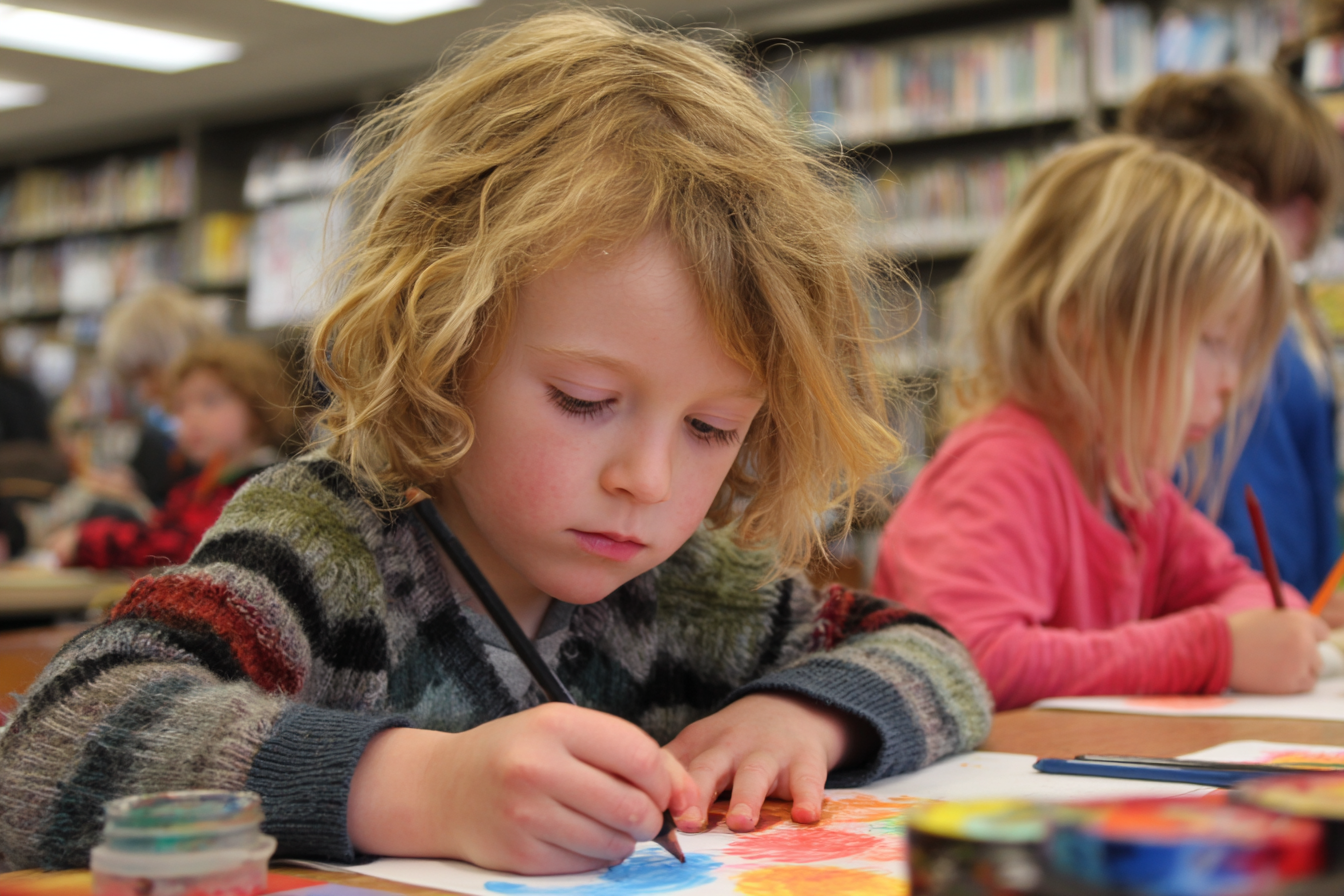
Focus: Introduce Kindergarten students to the library as a welcoming place for stories, questions, sharing, and discovery. Students practice entering the library, gathering in the story area, listening for directions, participating respectfully in read-aloud time, and beginning to understand that different readers may enjoy different books and topics.
Grade Level: K
Subject Area: Library (Routines • Belonging • Storytime Participation)
Total Unit Duration: 1–3 weeks, 50–60 minutes per session
I. Introduction
This opening Kindergarten library unit helps students feel safe, excited, and welcome in the library. For many children, this may be one of their first formal experiences with a school library space, so the unit focuses heavily on routines, expectations, and belonging rather than academic complexity. The librarian introduces where students enter, where they sit for storytime, where books and return bins are located, and how students can participate during read-alouds. Through gentle modeling, movement practice, and a welcoming story, students begin learning that the library is a place where everyone belongs and where different children may enjoy different kinds of books.
Essential Questions
- What is the library, and what can we do here?
- How do we enter, sit, listen, and move safely in the library?
- How can we participate respectfully during storytime and sharing?
- How can different students like different books and still all belong in the library?
II. Objectives and Standards
Learning Objectives — Students will be able to:
- Recognize the library as a welcoming place for stories, questions, sharing, and discovery.
- Follow simple library routines during entering, storytime, checkout or browsing, centers, and transitions.
- Participate respectfully during reading, listening, viewing, discussing, and sharing in the library.
- Identify basic areas of the library, such as the story area, book shelves or baskets, return bin, and center spaces.
- Recognize that classmates may enjoy different books and topics and that all readers belong in the library.
- (Optional Sessions) Strengthen beginning library routines through repeated practice, read-aloud participation, and simple reflection.
Standards Alignment — Kindergarten (AASL-based Custom)
- L:S2.Kc — Recognize that people may enjoy different books, topics, and viewpoints, and that all belong in the library.
- Example: A student understands that one classmate may choose a dinosaur book while another chooses a fairy tale.
- L:S6.Ka — Follow library rules and routines during storytime, checkout, centers, and transitions.
- Example: A student moves safely to the carpet and follows directions for cleanup.
- L:S6.Kc — Participate respectfully in reading, listening, viewing, discussing, and sharing in the library.
- Example: A student listens during a read-aloud and responds appropriately during discussion time.
Success Criteria — Student Language
- I can come into the library safely.
- I can sit in the story area and listen during a read-aloud.
- I can follow library directions and routines.
- I can share one idea or answer during storytime.
- I can understand that different children may like different books.
- I can help make the library a kind and welcoming place.
III. Materials and Resources
Tasks & Tools (teacher acquires/curates)
- Welcome materials:
- A friendly first-library read-aloud or picture book about books, school, kindness, belonging, or visiting a library.
- Visual tour cards or simple signs for story area, book area, return bin, checkout area, and centers.
- Optional puppet, stuffed animal, or mascot to model library routines.
- Routine supports:
- Picture cards for walk safely, sit on carpet, listen, raise hand, use quiet voice, clean up, and line up.
- Anchor chart for “We Are Library Learners.”
- Simple visual schedule showing: enter → storytime → activity/looking at books → share → line up.
- Student materials:
- Drawing paper or simple response page such as “My First Library Day.”
- Crayons, markers, pencils, and optional stickers.
- Optional book-choice cards with pictures of different topics such as animals, vehicles, fairy tales, dinosaurs, families, and funny books.
- Optional center materials:
- Book baskets, browsing bins, simple puzzles, coloring response sheets, puppets, or picture cards.
Preparation
- Choose a welcoming read-aloud that helps students feel excited about the library.
- Prepare a short, simple library tour that introduces only the most important spaces.
- Create anchor charts:
- “Welcome to the Library”
- “Library Learners Can…”
- “Storytime Looks and Sounds Like…”
- “Different Readers Like Different Books”
- Decide which routines students need to practice first: entering, sitting, listening, raising hands, browsing, cleanup, or lining up.
Common Misconceptions to Surface
- “The library is only for being quiet.” → The library is for listening, reading, wondering, sharing, and exploring respectfully.
- “Everyone has to like the same kind of book.” → Different students may like different books, and all of those choices belong.
- “Storytime means I can talk whenever I want.” → Students can share ideas, but they also practice listening and waiting.
- “Rules are just for stopping fun.” → Library routines help everyone feel safe, calm, and ready to enjoy books.
Key Terms (highlight in lessons) library, book, story, listen, share, routine, safe, respectful, belong, storytime
IV. Lesson Procedure
(Each session follows: Welcome/Focus → Mini-Lesson/Shared Reading → Work Time → Discussion/Sharing → Reflect → Check-Out. Timing for a 50–60 minute library class.)
Session 1 — Welcome to Our Library (Core Session — Addresses All Standards: L:S2.Kc, L:S6.Ka, L:S6.Kc)
- Welcome/Focus (5–8 min)
- Greet students at the library entrance and model how to enter calmly and safely.
- Invite students to gather in the story area and briefly explain that the library is a place for stories, questions, sharing, and discovery.
- Ask: “What do you think we might do in the library?”
- Mini-Lesson/Shared Reading (10–15 min)
- Read a welcoming picture book or short story aloud.
- Pause briefly to model storytime expectations: looking at the book, listening, raising a hand, and sharing one idea at a time.
- Use simple prompts such as:
- “What do you notice?”
- “What kind of book do you like?”
- “How can we listen kindly?”
- Reinforce that students may like different kinds of books, and that all readers belong in the library.
- Work Time (15–20 min)
- Students practice a simple library routine or activity, such as:
- walking from the story area to a book basket
- looking at books gently
- returning a book to a basket or return bin
- drawing something they saw or liked in the library
- practicing a short cleanup and return routine
- Librarian supports students with modeling, praise, and visual reminders.
- Students practice a simple library routine or activity, such as:
- Discussion/Sharing (8–10 min)
- Invite students to share one thing they noticed, liked, or are excited about in the library.
- Ask: “Did everyone choose or notice the same thing?”
- Reinforce that the library is for many kinds of readers and learners.
- Reflect (3–5 min)
- Students respond through speaking, drawing, or sentence stems such as:
- “The library is a place where I can ___.”
- “One book I might like is about ___.”
- “I can be respectful by ___.”
- Students respond through speaking, drawing, or sentence stems such as:
- Check-Out (3–5 min)
- Give brief, standards-based feedback such as:
- “You entered and moved safely in the library.”
- “You listened respectfully during storytime.”
- “You showed that different readers can like different books.”
- Give brief, standards-based feedback such as:
Optional Session 2 — Practicing Storytime and Library Routines (Extension — Deepen L:S2.Kc, L:S6.Ka, L:S6.Kc)
- Welcome/Focus (5–7 min)
- Review the visual schedule for library time.
- Ask: “What do library learners do when they come to the story area?”
- Practice entering, sitting, and getting ready to listen.
- Mini-Lesson/Shared Reading (8–12 min)
- Read another short, engaging picture book.
- Use the read-aloud to practice listening, looking, responding, and waiting for a turn.
- Model how students can share a simple idea respectfully, such as:
- “I like…”
- “I notice…”
- “This reminds me of…”
- Work Time (15–20 min)
- Students rotate through or practice one simple library routine, such as:
- browsing from a book basket
- putting books back gently
- moving safely to a center
- cleaning up materials
- returning to the story area
- Librarian reinforces routines with short, clear prompts and visual cues.
- Students rotate through or practice one simple library routine, such as:
- Discussion/Sharing (8–10 min)
- Students share one routine they practiced.
- Ask: “How did that routine help our library class?”
- Highlight examples of safe movement, careful book handling, respectful listening, and kind sharing.
- Reflect (3–5 min)
- Students respond:
- “I practiced ___.”
- “I can help library time by ___.”
- Students respond:
- Check-Out (3–5 min)
- Give brief feedback tied to the standards, such as:
- “You followed a library routine carefully.”
- “You participated respectfully during reading and sharing.”
- “You helped make the library safe and welcoming.”
- Give brief feedback tied to the standards, such as:
Optional Session 3 — We All Belong in the Library (Extension — Solidify L:S2.Kc, L:S6.Ka, L:S6.Kc)
- Welcome/Focus (5–7 min)
- Ask: “What kinds of books do different students like?”
- Show a few sample book covers or topic cards and remind students that different choices are welcome.
- Mini-Lesson/Shared Reading (8–12 min)
- Read a story connected to belonging, friendship, school, or books.
- Pause to notice how people can like different things and still be part of the same community.
- Model language such as:
- “I like this kind of book.”
- “You might like a different kind of book.”
- “Both choices belong in the library.”
- Work Time (15–20 min)
- Students choose or draw a book/topic they might enjoy in the library.
- Options may include:
- drawing a favorite kind of book
- choosing a picture card for a topic they like
- looking at a book basket and sharing one book they are curious about
- practicing a short browsing and return routine
- Librarian supports students in respecting classmates’ different interests.
- Discussion/Sharing (8–10 min)
- Students share one kind of book or topic they like.
- Encourage the class to notice how many different interests are represented.
- Reinforce that the library belongs to all readers and learners.
- Reflect (3–5 min)
- Final reflection prompt:
- “I belong in the library because ___.”
- “One book I might like is ___.”
- “I can be respectful in the library by ___.”
- Final reflection prompt:
- Check-Out (3–5 min)
- Give brief, standards-based feedback such as:
- “You shared your book interest respectfully.”
- “You listened when classmates shared different favorites.”
- “You followed library routines and helped our class feel welcome.”
- Give brief, standards-based feedback such as:
V. Differentiation and Accommodations
Advanced Learners
- Invite students to explain why they might choose one book or topic over another.
- Encourage students to model a routine such as entering, sitting, or returning a book carefully.
- Ask students to notice how classmates’ book interests are similar or different.
Targeted Support
- Use simple visuals and repeated language for routines.
- Provide sentence stems such as:
- “I like books about ___.”
- “I can listen by ___.”
- “I can help by ___.”
- Keep routines short, concrete, and practiced more than once.
Multilingual Learners
- Provide picture-supported vocabulary for library, book, story, listen, share, safe, sit, walk, belong.
- Allow students to point, gesture, choose picture cards, or draw before using oral language.
- Use repeated modeling and partner support.
- Keep teacher language clear and paired with visuals.
IEP/504 & Accessibility
- Break routines into small steps: enter, sit, listen, share, clean up.
- Offer visual schedules, carpet spots, picture cards, and predictable movement paths.
- Allow oral, drawing, pointing, or gesture-based responses.
- Provide extra adult or peer support during transitions, storytime, and cleanup as needed.
VI. Assessment and Evaluation
Formative Checks (each session)
- Session 1 — Students begin entering the library, gathering for storytime, listening, and sharing with support.
- Optional Session 2 — Students practice storytime, browsing, cleanup, and transition routines more confidently.
- Optional Session 3 — Students recognize that classmates may enjoy different books and participate respectfully in sharing and routines.
Summative — Welcome to the Library Reflection & Participation (0–2 per criterion, total 10)
- Recognizing That Different Books and Topics Belong (L:S2.Kc)
- 2: Student shows understanding that people may enjoy different books or topics and that all belong in the library.
- 1: Student shows some awareness that classmates may like different books with support.
- 0: Student has difficulty recognizing that different book choices belong.
- Following Library Rules and Routines (L:S6.Ka)
- 2: Student follows simple library routines during storytime, checkout or browsing, centers, and transitions with support appropriate for Kindergarten.
- 1: Student follows some routines but needs frequent reminders.
- 0: Student has difficulty following library routines consistently.
- Participating Respectfully in Reading, Listening, Viewing, Discussing, and Sharing (L:S6.Kc)
- 2: Student participates respectfully during reading, listening, viewing, discussing, and sharing in the library.
- 1: Student participates respectfully some of the time but needs reminders.
- 0: Student rarely participates respectfully during library activities.
- Understanding the Library Space
- 2: Student can identify or use basic library areas such as story area, book baskets, return bin, or centers with support.
- 1: Student recognizes some library areas but needs guidance to use them appropriately.
- 0: Student has difficulty understanding or using basic library spaces.
- Reflection on Belonging and Participation
- 2: Student can share or show one way they belong or can participate in the library.
- 1: Student gives a basic reflection with support.
- 0: Student provides little or no meaningful reflection on library participation.
Feedback Protocol (TAG)
- Tell one strength (e.g., “You listened during storytime and helped our library feel welcoming.”).
- Ask one question (e.g., “What kind of book are you excited to look for in the library?”).
- Give one suggestion (e.g., “Next time, try remembering the storytime routine right away when you come in.”).
VII. Reflection and Extension
Reflection Prompts
- What is one thing I can do in the library?
- How can I be respectful during storytime and sharing?
- What kind of book or topic might I like in the library?
Extensions
- Library Tour Practice: Revisit library areas during future lessons so students build comfort with the space.
- Favorite Book Basket: Create a rotating basket of welcoming books for students to explore during the first weeks of school.
- Family Connection: Encourage students to tell someone at home one thing they learned about the library and one kind of book they want to find.
Standards Trace — When Each Standard Is Addressed
- L:S2.Kc — Session 1 (introducing that different readers may like different books), Optional Session 2 (respecting classmates’ responses and choices), Optional Session 3 (sharing book interests and reinforcing that all readers belong).
- L:S6.Ka — Session 1 (entering, storytime, and basic library routines introduced), Optional Session 2 (practicing storytime, browsing, cleanup, and transition routines), Optional Session 3 (using routines while browsing and sharing).
- L:S6.Kc — Session 1 (respectful participation during read-aloud and sharing), Optional Session 2 (participating respectfully in storytime and routine practice), Optional Session 3 (respectful listening, discussing, and sharing around book interests).